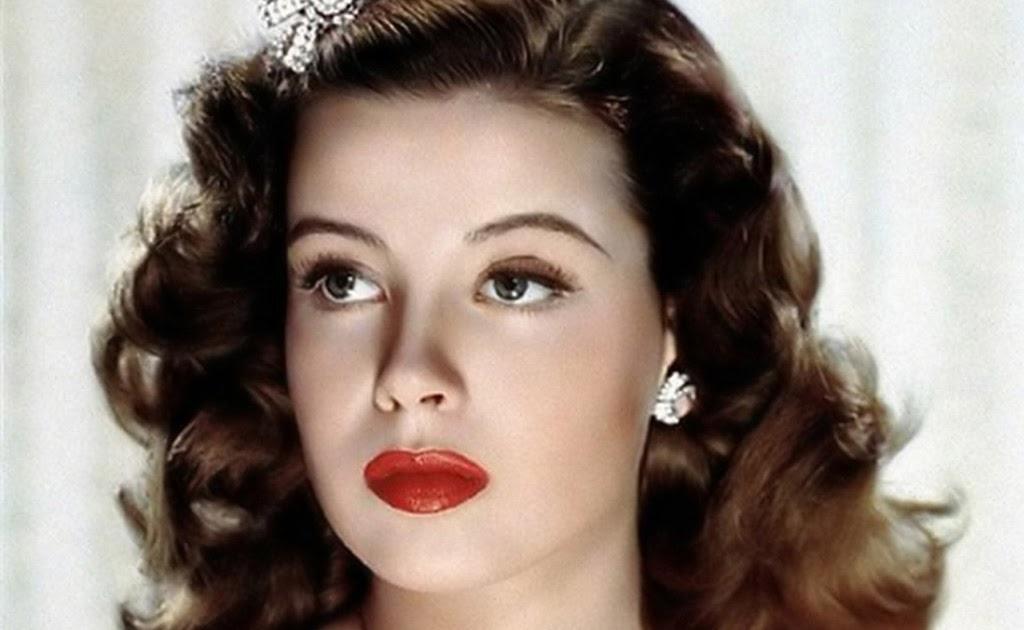
THE HISTORY AND TUTORIAL OF AUTHENTIC 1940S MAKEUP

1940s makeup is one of the most “vintage” looks, and is rather simple to recreate. There was a push for all things natural, unlike the 1930s and 1950s, which favored reshaping eyebrows and contouring the face. 1940s makeup enhanced natural beauty with just a few tools.

During the war, European women dealt with huge cosmetics shortages, since petroleum and alcohol – some of the main ingredients in makeup at the time – were used for the war effort. When makeup ran out, women turned to home remedies to substitute, such as using beetroot juice to stain lips and petroleum jelly to darken lashes and shape eyebrows.

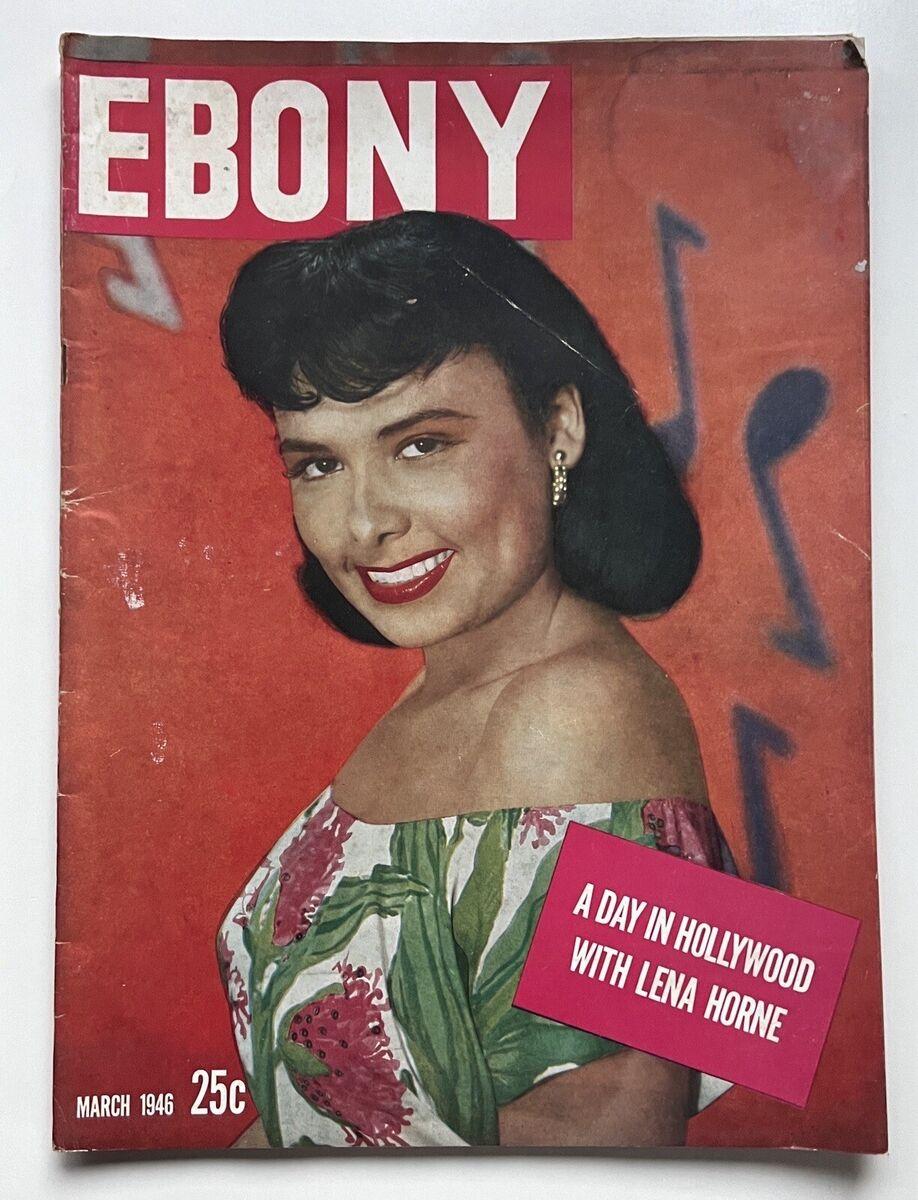
In the United States, cosmetics continued to be manufactured throughout the war and were seen by the government as a morale booster for the busy women on the home front. Women were encouraged to wear makeup all the time to hide sadness and attract men, even while at work. Athletes even wore makeup. Color films had a big impact on the market, as women could now imitate the shades worn by Hollywood starlets. By 1948, between 80 and 90 percent of women wore lipstick, two thirds wore rouge, and a quarter wore eye makeup.
The 1940s makeup look exudes classic sophistication and is surprisingly easy to recreate. The emphasis was on a flawless, fresh-faced appearance—natural, never overly done. Less was definitely more, which worked out well, especially during the war years when many women had to make do with fewer products and resources.

Although the final result seems simple, a woman’s 1940s makeup routine could take some time—quick five-minute makeup wasn’t a thing! The process began with applying and blending thick foundation. Women were encouraged to shape their face with both light and dark shades of foundation—darker tones could be used to contour areas like a large nose, broad forehead, or square jaw, while lighter shades on the cheeks would add a fuller, plumper appearance.

Next, eye shadow was applied, followed by moist rouge. This was often used not only for color but also for subtle shaping, always ensuring the look remained natural. Afterward, a generous application of powder was pressed into the face with a large velour or wool puff. The powder was applied heavily to ensure a matte finish, covering the entire face. Excess powder was then brushed away with a powder brush to reveal a smooth, polished look.

If the moist rouge needed extra reinforcement, a powdered version was applied on top of the powder. The final steps included defining the eyebrows with an eyebrow pencil, applying mascara for fuller lashes, and finishing with the signature bold lipstick.
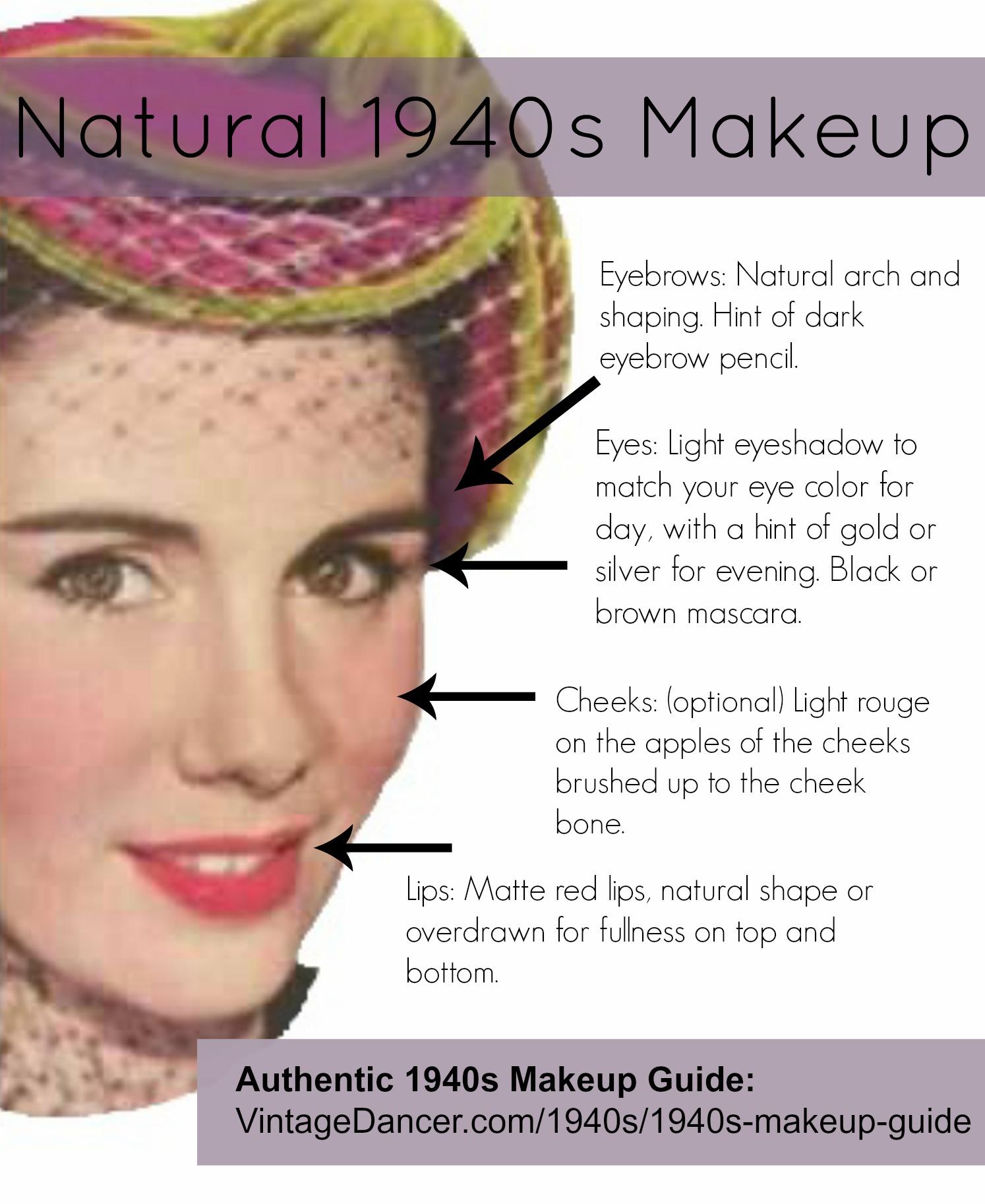
What You’ll Need:

  • Foundation: Choose a shade that closely matches your skin tone.
  • Powder: Loose powder that matches your skin tone to set the foundation.
  • Cream Rouge: Go for a rose-pink cream rouge (avoid powder if possible, unless that’s all you have).
  • Eyebrow Pencil: Choose a pencil that matches your natural brow color, or one shade darker than your hair.
  • Eye Shadow: (Optional, for evening wear) Use matte shadows that match your eye color—avoid shimmer.
  • Mascara: Dark brown or black mascara, or you can even use petroleum jelly (like Vaseline) for a more subtle lash effect.
  • Lipstick: A classic, matte red lipstick for that bold, vintage look.

1940s Foundation and Powder

Foundations in the 1940s were quite different from today’s lightweight options. There were fewer shades available, and most foundations had a pinkish tint, which worked well for white women, but wasn’t always suitable for women of color. Many Black women, for instance, either mixed their own makeup or often went without powder.

Foundations during this time were much thicker and creamier compared to today’s formulations. Liquid foundations as we know them didn’t exist, and the creamier formulas helped provide a fuller coverage. Face powder, which was essential, was used to set the foundation and keep the face matte throughout the day. It matched the skin tone but was also used to help the foundation adhere better to the face—foundation alone would often cause powder to slip off.

The foundation and powder were extended down the neck and onto the blouse or dress line, as it was common for the foundation shade to not perfectly match the skin on the rest of the body. This helped create a seamless, blended look.

Tip: For a smooth application, lightly coat your face with baby oil (or mineral oil) before applying foundation. This helps create a smooth base and allows the foundation to blend more easily.
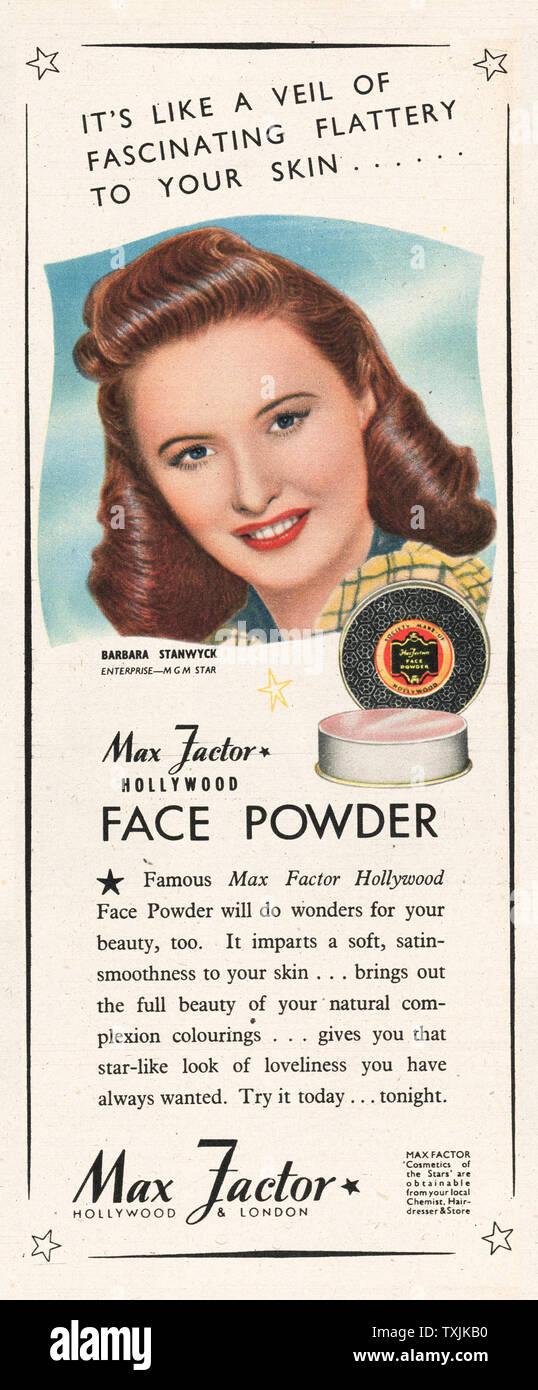
1940S FACE POWDER

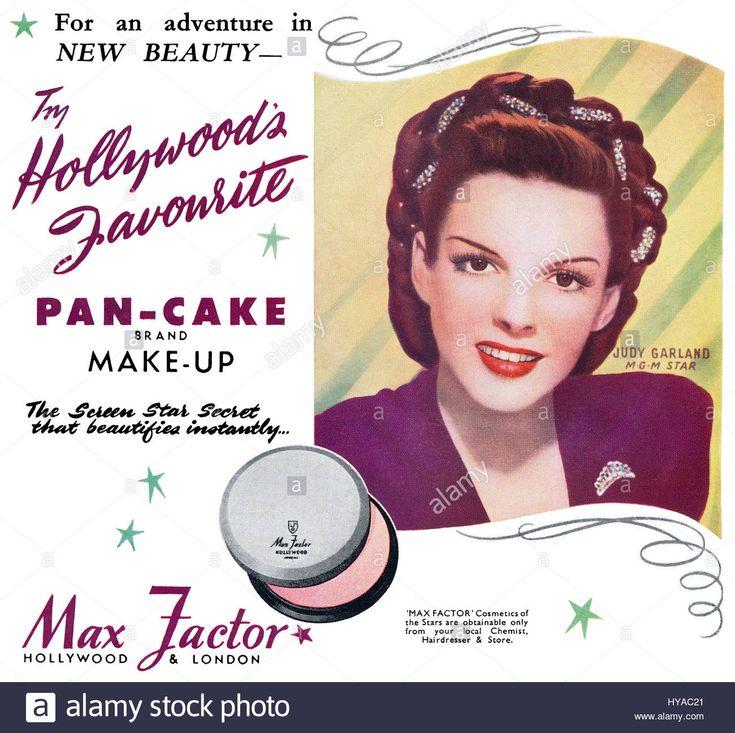
Powders should match your natural skin tone as much as possible. Light shades kept a woman looking fresh and youthful, while a slightly bronzed shade added a sun kissed glow, popular with movie stars. Almost all makeup lines carried a sun kissed color or two.

If you are over 40, your skin is prone to yellowing, in which case a powder with a pink tinge will work better for you.  To apply, use a puff to dust your face all over and then brush from the neck up to the forehead. Only brush down once to finish and smooth out face fuzz.
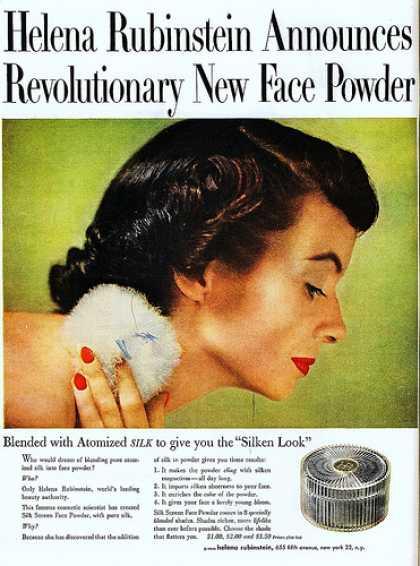
Tip: A fluffy face puff makes a difference. Don’t use compressed powder with a flat pad for early 1940s looks. Pan-cake compressed makeup came out in the mid 1940s with big success. To women who could afford it, it provided more coverage applied in less time. Just remember to always brush up, never down.

1940s Blush
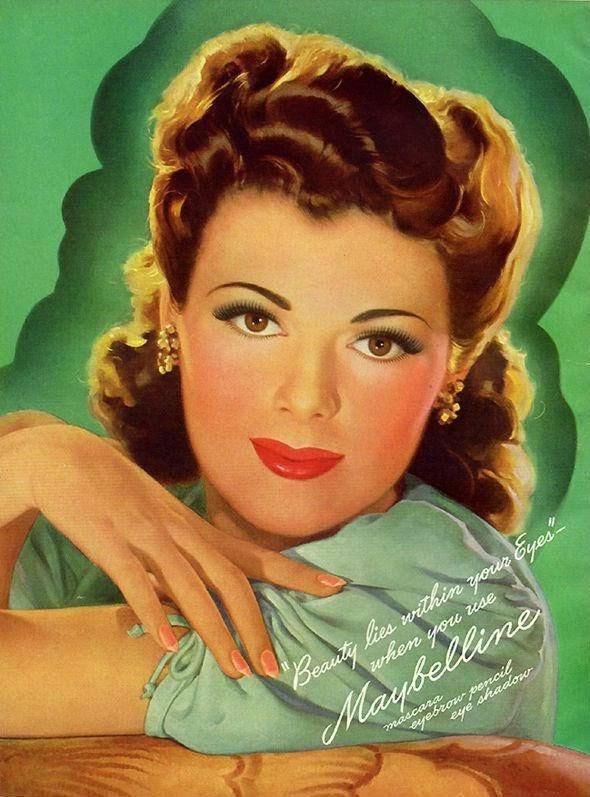
In the 1940s, blush (referred to as rouge) was applied sparingly to create a natural, rosy glow. The shades of rouge were limited, typically ranging from peach and coral to raspberry tones, with darker shades for those with bronze or deeper skin tones. Cream rouge (moist rouge) was the preferred choice, giving a more natural look, and was often blended directly into the foundation. Powdered rouges were also used lightly over the cheeks to give a soft flush.

Although rouge was an important part of the look, it wasn’t strictly necessary for achieving the 1940s style. You could still achieve the desired effect without it.

Tip: If you can’t find cream rouge, a light matte lipstick in a pink or peach shade works well. Simply apply it with your fingers, dab it on the cheeks, and blend it in until it seamlessly matches your skin tone.

Cream or liquid rouges were sometimes found in theatrical costume makeup stores and, in modern times, can be found in some makeup brands on platforms like Amazon.

1940s Eyebrows

The 1940s eyebrows were a continuation of the 1930s style, with thin, beautifully arched brows being the key feature. Eyebrows were kept natural-looking, with only stray hairs removed to maintain a soft, even arch. The arch itself was well-groomed but not overly thin—most women didn’t over-pluck.

Eyebrows were often defined with a pencil that was slightly darker than the hair color, or some women simply applied a bit of petroleum jelly to keep the brows in place and enhance their natural shape. For daywear, this softer look was more common, while in the evening, brows might be more defined.

As the decade progressed, the full, more defined brows of the late ’40s began to take hold, but they were never as thick as modern-day brows.

1940s Eye Makeup

Eye makeup in the 1940s was quite minimal, especially during the daytime. Most women wore just a light coat of mascara, often in dark brown or black. Some even used petroleum jelly (Vaseline) to achieve a subtle lash definition. Mascara came in different forms—liquid, paste, or cake—often built up by adding a little water or spit to the cake to get the desired consistency. Mascara was applied to both the upper and lower lashes for a fuller look.

For evening looks, eye shadow could be used, but only in neutral tones. The colors were typically chosen to match the eye color—blue-grey for blue eyes, grey for green eyes, and brown for brown or hazel eyes. The eyeshadow was applied in a single color, blended from the lash line up to the brow for an elegant and simple look. No smoky eyes or contouring here—just one shade blended well. For evening looks, sometimes silver or gold was added to create a little extra glamour.

Eyeliner wasn’t commonly used in the early 1940s; it was considered too harsh and “fake-looking.” It didn’t make an appearance until the late ’40s, and even then, it was applied only to the top lash line.

1940s Lipstick
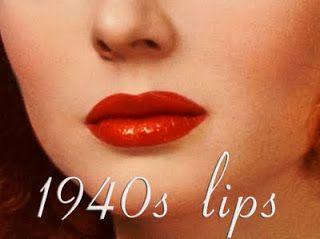
Lips were the focal point of 1940s makeup, especially during the war years, when red lipstick was seen as a mood booster. Lipstick shades varied from bluish reds to orange-toned reds, but they were all red! Bright pinks weren’t worn until the 1950s, so reds were a constant. In the fall, red lipstick tended to get darker, and in the spring, it lightened up a bit.

Most lipsticks of the time were matte, and women were advised to moisturize their lips before applying. After applying lipstick, they would often blot their lips with a tissue to ensure the color stayed put. By 1948, lipstick pencils were introduced, allowing for a more precise application and a perfect outline around the lips.

The ideal lip shape was full and even, with a smooth contour on the top and bottom lips. The “Hunter’s Bow” lip shape, popularized by Joan Crawford, involved slightly over-drawing the lips to make them appear plumper. However, actresses like Lauren Bacall and Ingrid Bergman embraced their naturally thin lips and didn’t over-draw them.

Tip: To achieve a perfectly shaped lip, start with the cupid’s bow and draw the pencil out to the corners of the mouth. Fill in with lipstick and gently rub your lips together to ensure an even finish. Touch up any uneven spots on the bottom lip.

1940s Fingernail Polish
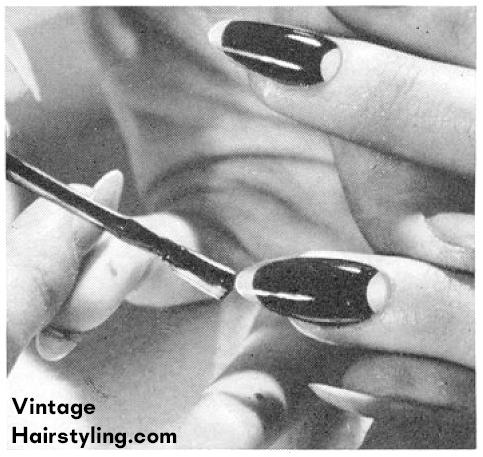
In the 1940s, nails were always neatly trimmed, often filed into a long oval shape. During wartime, nails were kept a bit shorter for safety, but they were still manicured regularly. Cuticles were carefully trimmed and moisturized for a polished look.

Nail polish in the ’40s was almost always red, and matching your nails to your lipstick was the norm. Other shades like pink, coral, rose, and burgundy were also popular. A clear topcoat was always used for durability, and some women embraced the “half-moon” style, where the base of the nail (around the cuticle) was left unpainted.

Tip: To create a half-moon shape on your nails, apply paper reinforcements to the base of each nail, aligning the top of the hole with the cuticle. Paint your nails, then remove the reinforcements before the polish fully dries for a neat, vintage look.

1940s Makeup Products to Buy Today

To create an authentic 1940s look today, you don’t need a complicated routine. A bit of face powder, black mascara, well-defined brows, and red lipstick will give you that classic, vintage style. Modern makeup tends to have more shine and glitter, but for a true 1940s look, opt for matte products—especially for your lips, cheeks, and eyes.

Tip: Many modern makeup lines offer matte formulas, but brands like Revlon and Max Factor (which were popular in the 1940s) still offer products that capture that vintage style. Besame is another brand that specializes in recreating vintage makeup colors and formulas from the ’40s.

For a more subtle daytime look, keep your makeup light—just a dusting of powder, a touch of blush, and a swipe of mascara. For a more dramatic evening or pinup style, go heavier on the lipstick and mascara, and use a little more rouge for that retro glam.
40 ADORABLE NATURAL HAIRSTYLES FOR BLACK KIDS

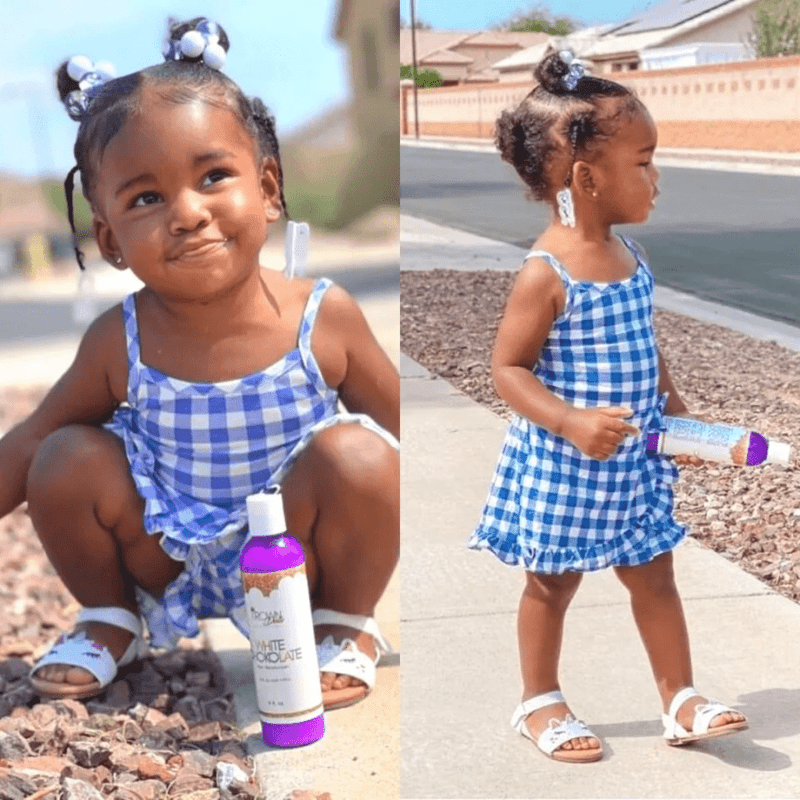
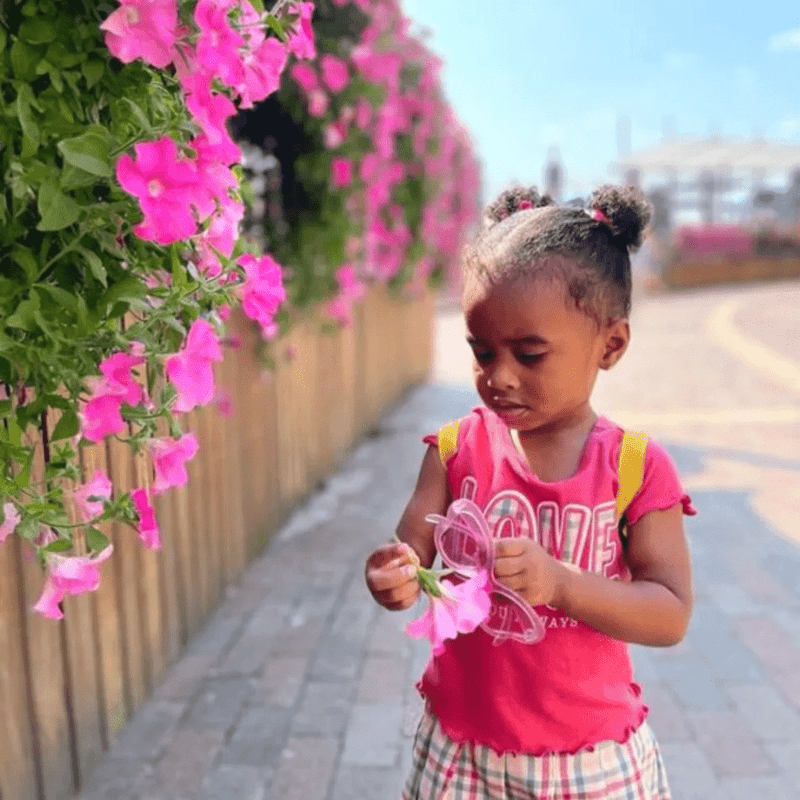
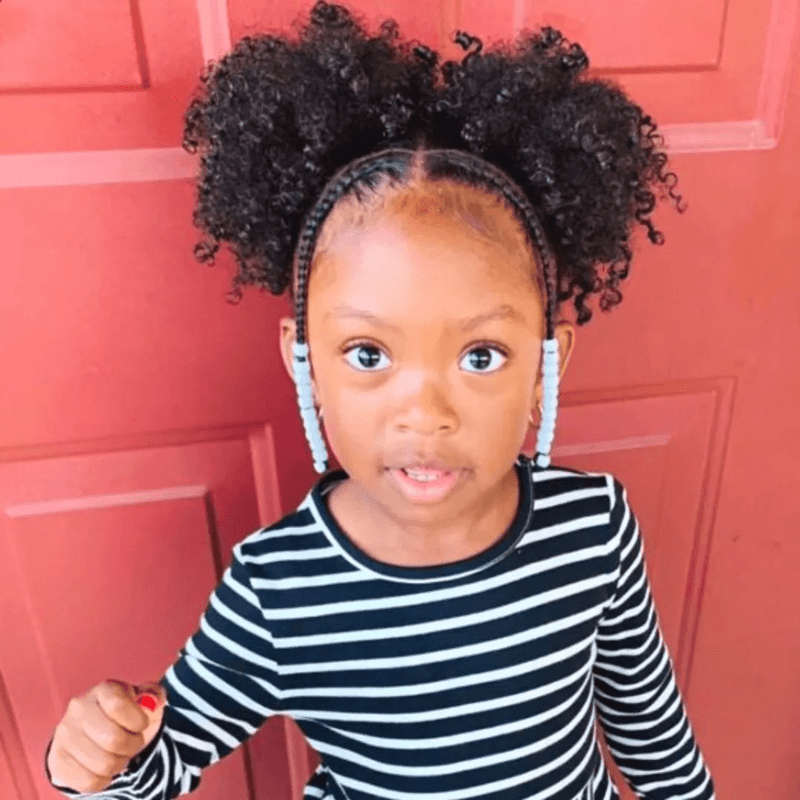
Your little one is a bundle of joy, and their natural hair is a crown of glory! Let’s celebrate the beauty of their curls, coils, and kinks with a collection of 40 irresistibly cute hairstyles perfect for two-year-old black toddlers. From simple styles for everyday adventures to intricate looks for special occasions, we’ve got you covered. Get ready to discover endless possibilities for your toddler’s hair and watch their confidence bloom! Let’s dive into the world of toddler hair and explore some amazing styles together!

AT WHAT AGE CAN I START STYLING MY BABY’S HAIR?

You can style your little girl’s hair at any age. The hairstyles below are perfect for children who are two years old or younger. From a simple headband to easy puffs or buns, there are endless possibilities for adorning her hair.

ARE BRAIDS SUITABLE FOR TODDLERS?

Braids can be a fantastic choice for toddlers when done gently and with care to avoid putting too much tension on the scalp.

AT WHAT AGE IS IT APPROPRIATE TO START BRAIDING (OR CORNROWING) MY BABY’S HAIR?

very child is unique, but generally, by age three, most toddlers have the patience to sit for an hour or more, especially with distractions. The right age for braiding your child’s hair can also depend on their hair texture and length. If your daughter has kinky 4c hair that is longer than 3 inches, you can braid it comfortably without causing tension. In such cases, her hair might be ready for braids as early as 12 months old.

HOW CAN I CARE FOR MY TODDLER’S HAIR?

Early protective measures, such as using satin bonnets and pillowcases, help reduce breakage and frizz. Loosen the base of ponytail sections before bedtime to prevent pain and damage from tension.

To keep her hair moisturized, apply a leave-in conditioner twice a week and use a gentle oil, like olive oil, to grease her scalp.

For healthy hair growth, wash her hair weekly and follow up with a deep conditioning treatment to nourish and support continued growth.

THE MOST ADORABLE HAIRSTYLES FOR TWO-YEAR-OLD TODDLERS

WASH AND GO ON BABIES

Who says little girls can’t rock a wash-and-go? When you want to switch things up, simply gather her hair into a stylish mega puff.

STITCH BRAIDS ON A TODDLER

Precision is essential for this 4-5 pie slice cornrow style. The cornrowed sections are divided into perfectly aligned slices, highlighting the meticulous braiding skills of moms.

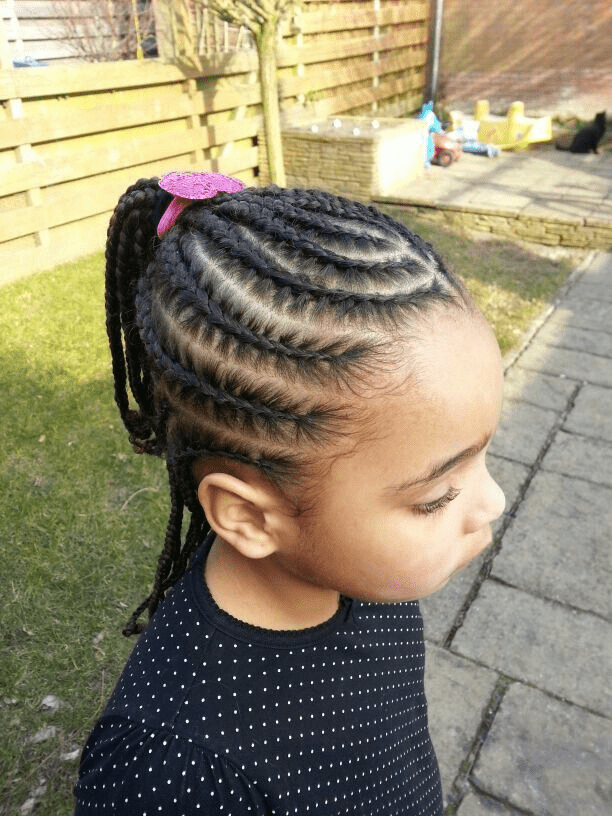
LOVELY CORNROWS

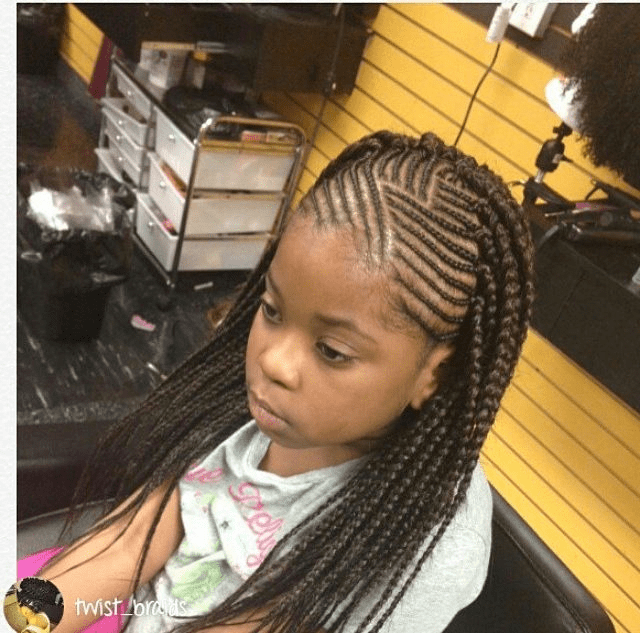
These natural hair cornrows reveal a heartwarming surprise at every twist and turn, making them ideal for your most patient little ones. Complete the look with a coordinating hair accessory of your choice.

TWO STRAND TWISTS WITH ACESSORIES

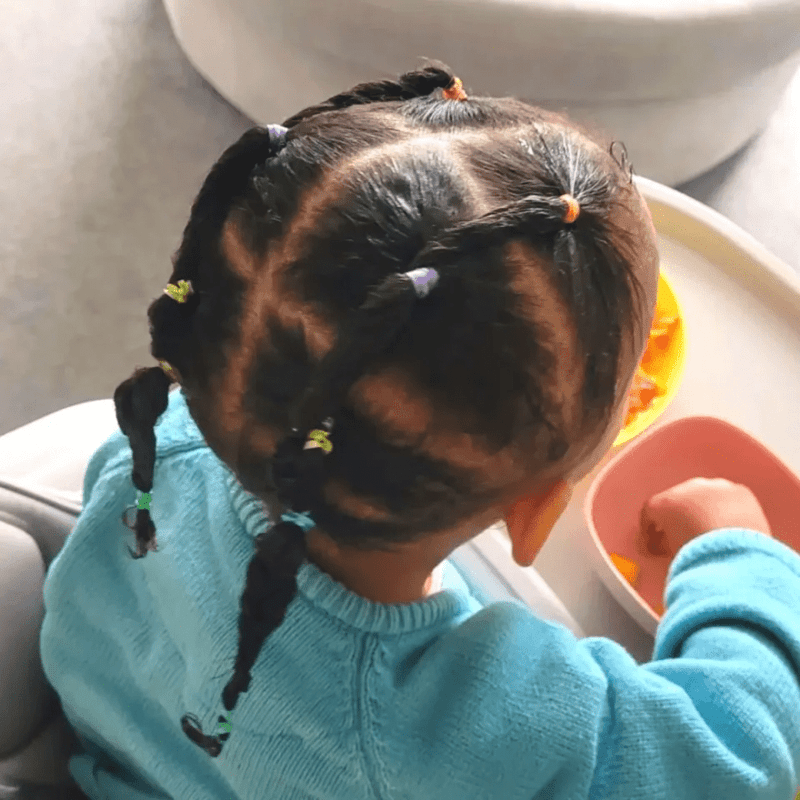
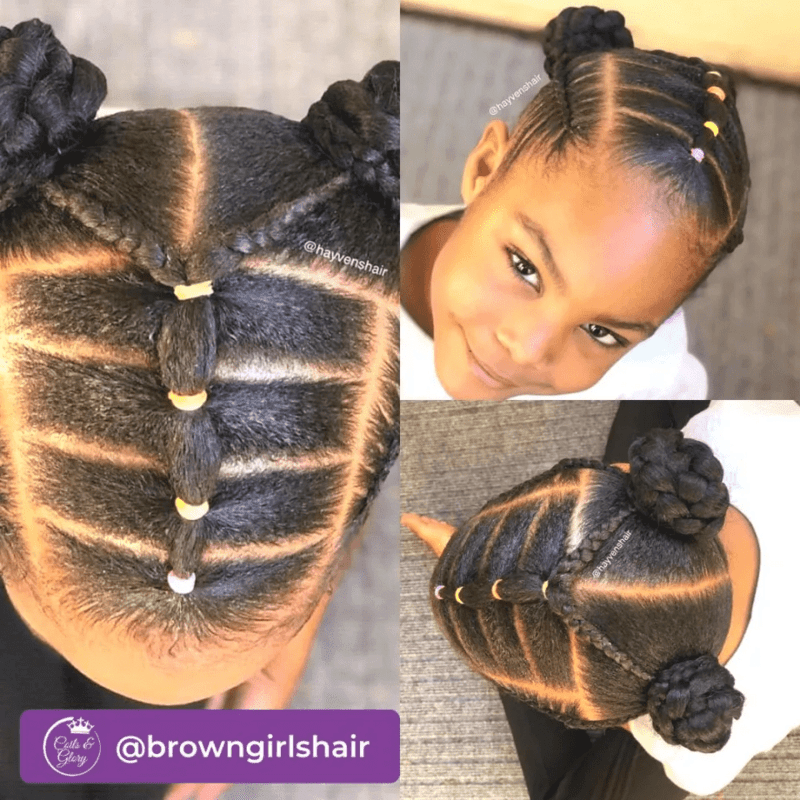
For those who prefer not to braid, you can achieve a cornrow-like effect by using small banded sections that interlock with each other. This approach helps keep the hairline mostly fuzz-free and adds a unique twist to this 6-section style.

FRONTAL CORNROWS

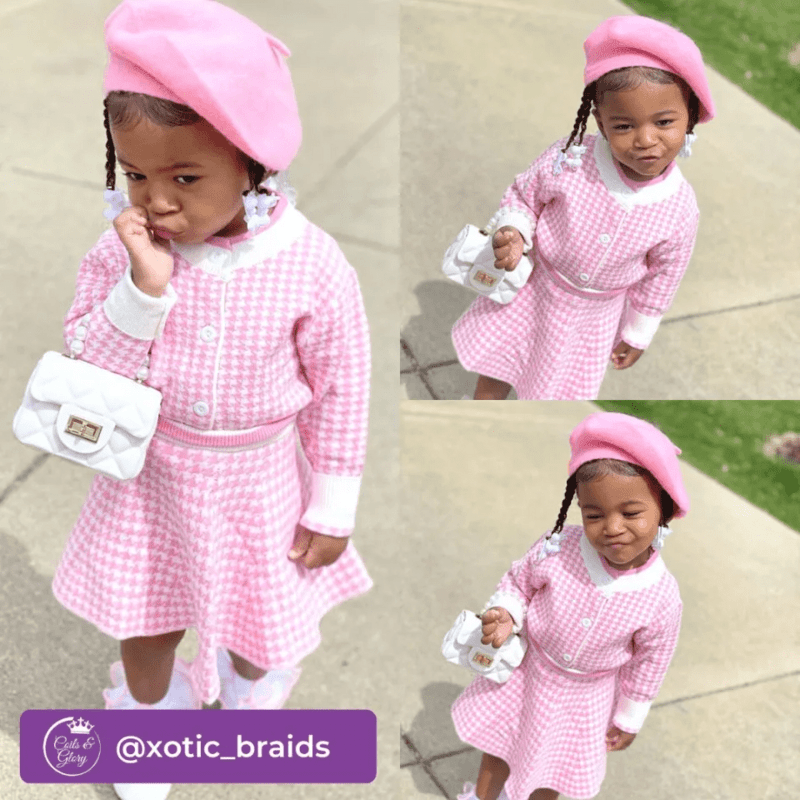
A few cornrows paired with butterfly clips turn this short natural style into an ethereal delight. It’s perfect for kids who have a hard time sitting still for hair appointments. This simple hairstyle can even be braided while she’s asleep or eating.

SOFT TWO STRAND TWISTS WITH A MEGA BOW

Classic twists and weighted ends become more engaging with freestyle parts and sections divided into odd numbers.

EIGHT CHUNKY TWO-STRAND TWISTS

In this style, banded sections are connected after the rubber bands are placed. A loose, twirly twist is secured with a firm braid at the end to keep the hair in place.

CREATIVE TWISTS IN A PUFF

Banded sections are divided in two, twisted, and then gathered into a high, soft coily puff with the loose ends.

EASY CORNROWS ON TODDLER

FREESTYLE BUNS AND PLAITS

This style captures all that’s delightful about fresh baby girl hairstyles. Since growth can be uneven and unpredictable, mix and match styles to suit her current length. Short pieces can be styled high, long pieces gathered low, and every piece looks absolutely adorable.

MINI PUFFS ON SHORT HAIR

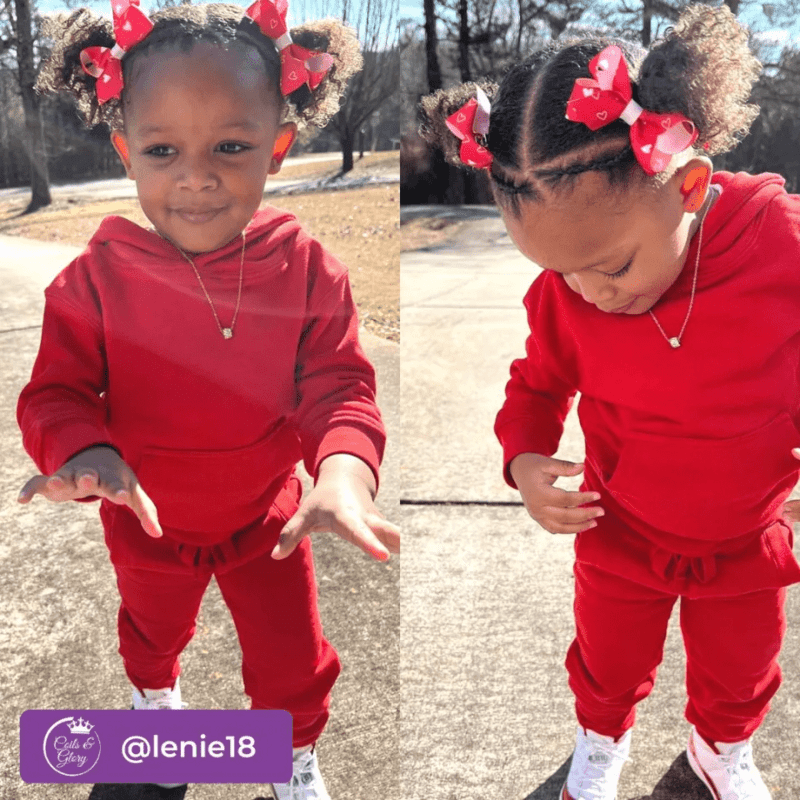
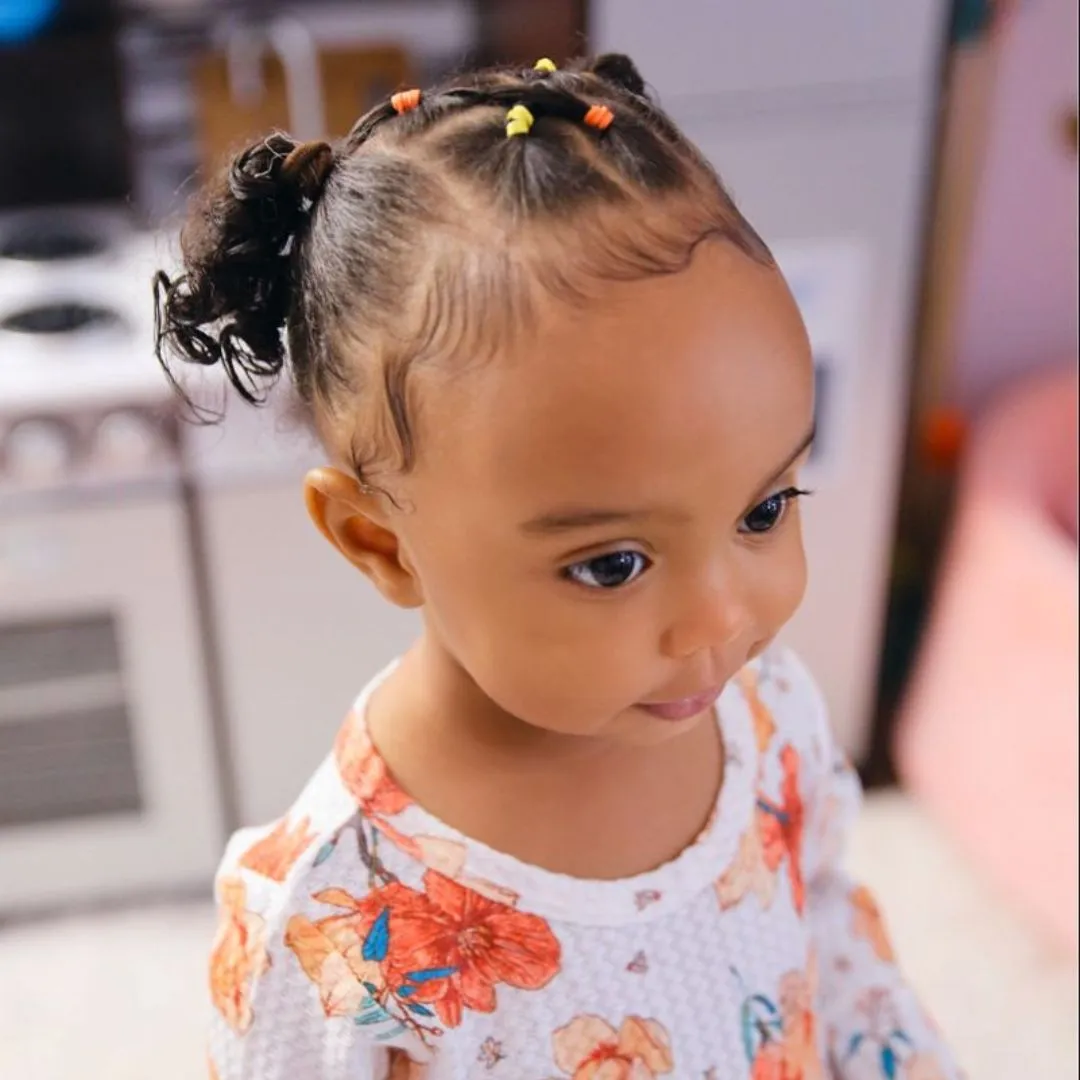
On days when you’re too tired for anything complicated, you’ll be relieved to know that pigtails secured with colorful hair ties matching your little girl’s outfit are always a great choice.

MEGA CURLY PUFFS WITH FULANI CORNROWS

As your toddler’s hair grows in length and volume, take advantage of this low-maintenance styling phase. Highlight her girlish charm with soft duckbill flower clips that won’t strain her roots or pinch her delicate skin while she naps.

MEGA BUNS WITH SCRUNCHIES

Boost your baby girl’s bun volume with double scrunchies and pair it with a matching outfit!

RUBBERBAND HAIRSTYLE WITH CORNROWS AND BUNS

Enhance your basic row-back skills with precise parts to add depth to the style. Rainbow rubber bands introduce a vibrant touch between two standard cornrows on either side. Tightly plaited ponytails can be styled into buns early in the week and then switched to a braid-out for some extra volume before wash day.

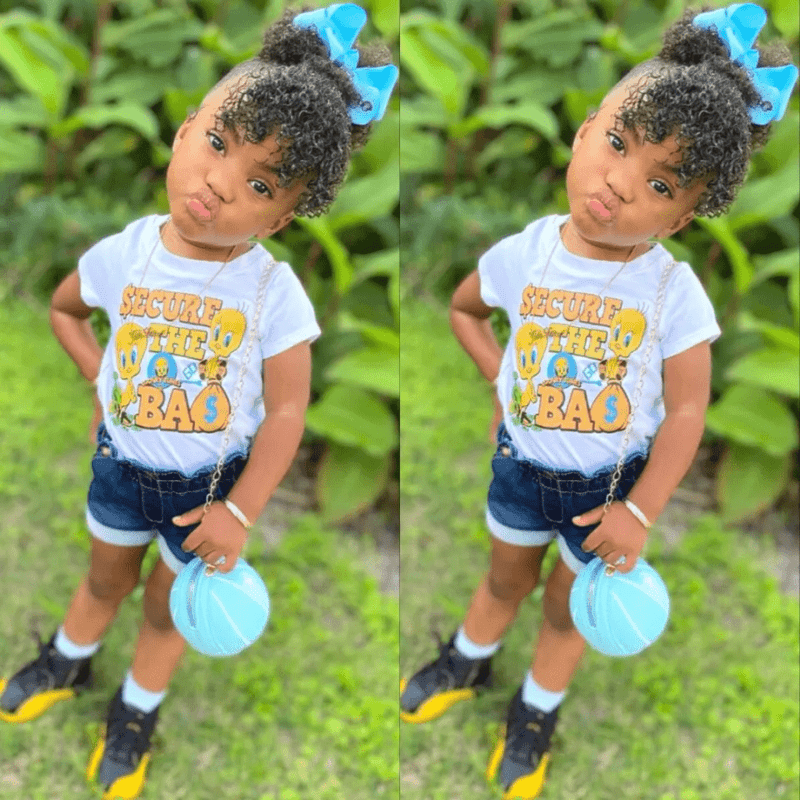
SUMMERTIME CURLS

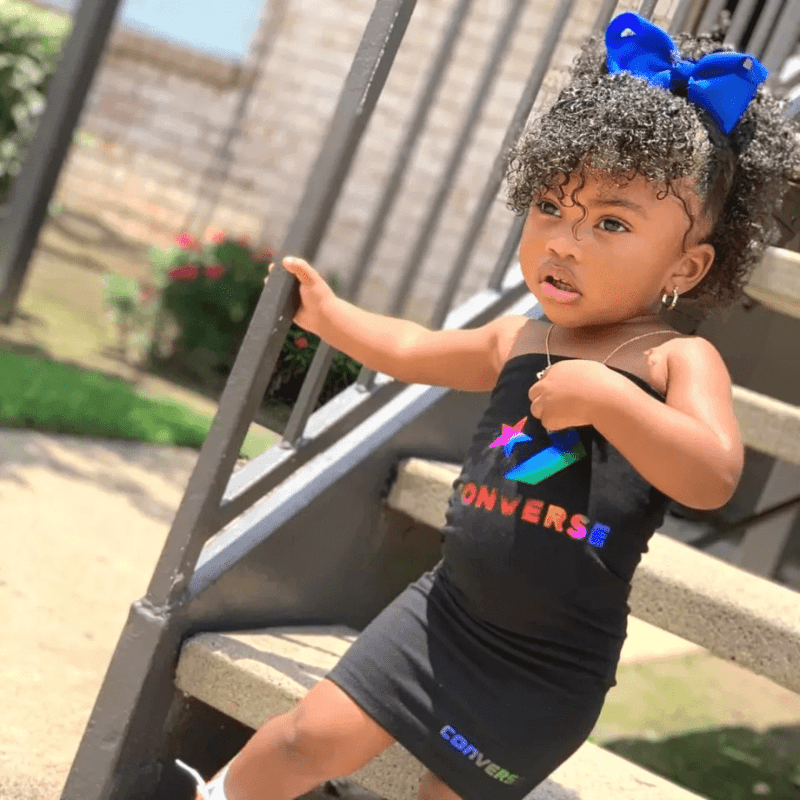
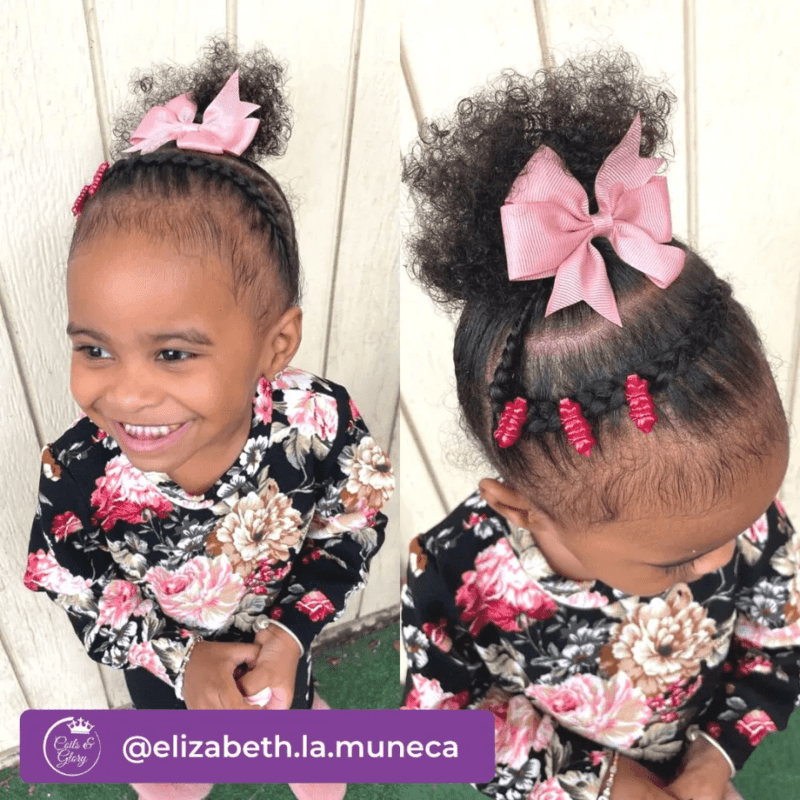
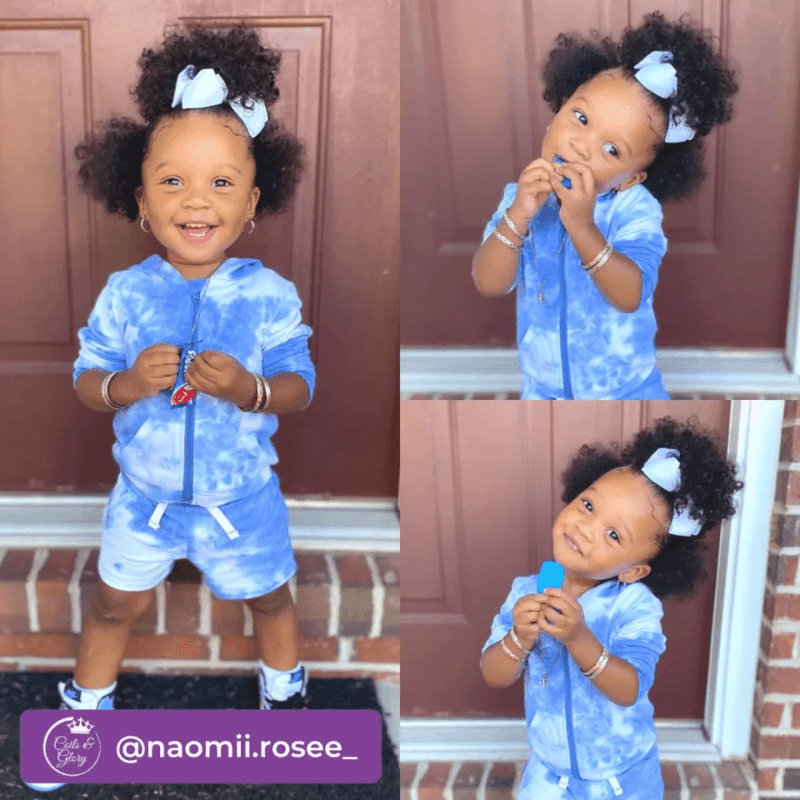
Natural curls are ideal for styling baby girls’ hair during summer, especially when pool splashing and sprinkler fun can leave twists and braids looking fuzzy. To avoid matted, tangled beads from chlorine-dampened hair, pre-treat loose, free-flowing curls that can be easily rinsed and detangled after water play. Gather a small section at the top and add a bow for a cute, fancy look for a post-pool playdate.

SIMPLE JUMBO TWISTS WITH ACCESSORIES

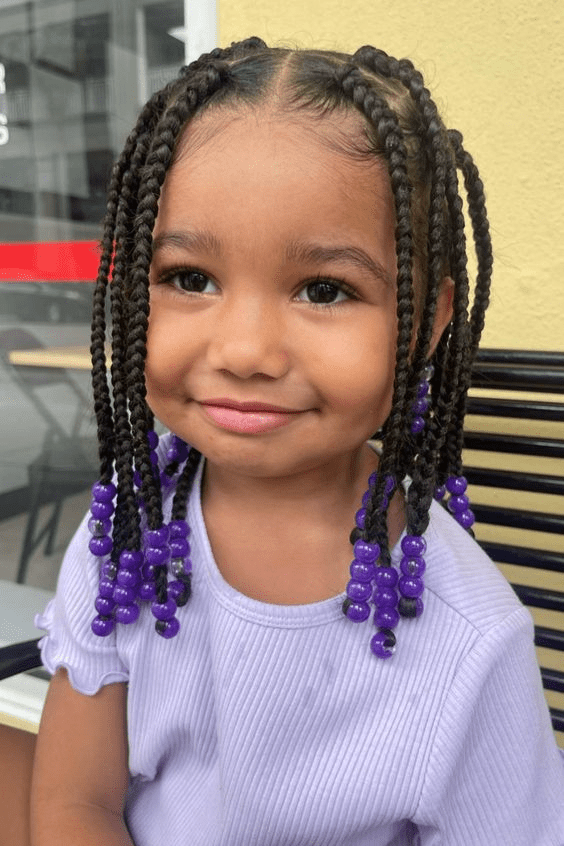
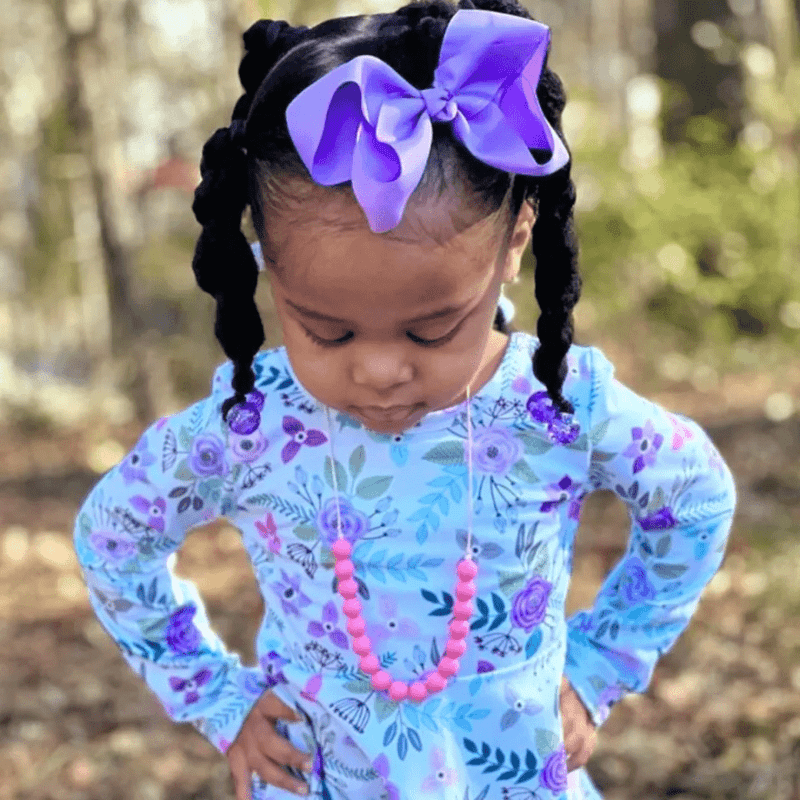
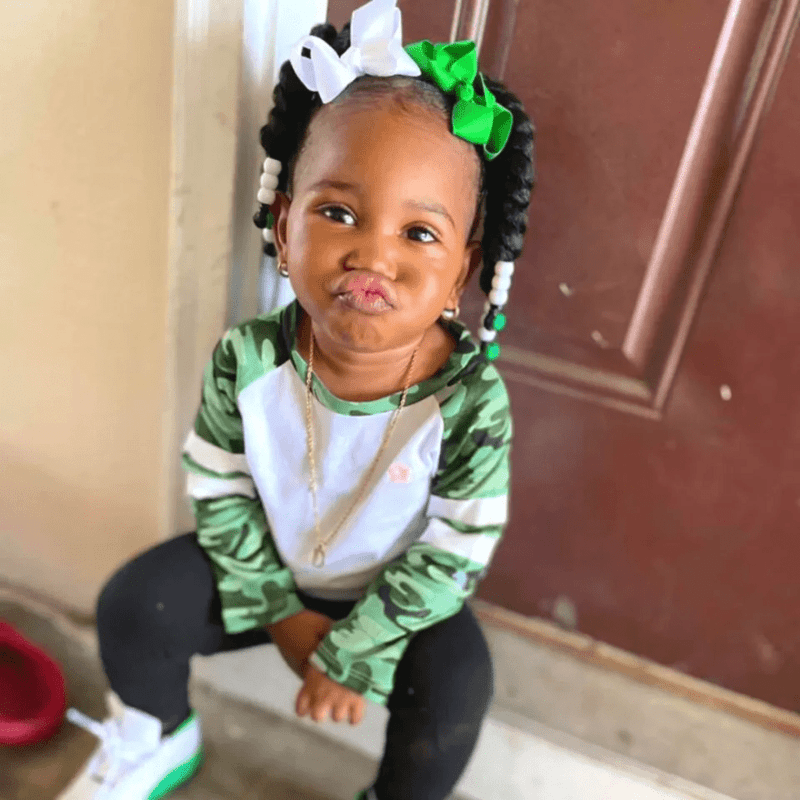
Medium-sized beads are a fantastic addition to the ends of larger braids or twists. They transform a basic four-square layout into something special for any occasion! Complete the look with coordinating bows for the perfect finishing touch.

SIMPLE PLAITS WITH ACCESSORIES

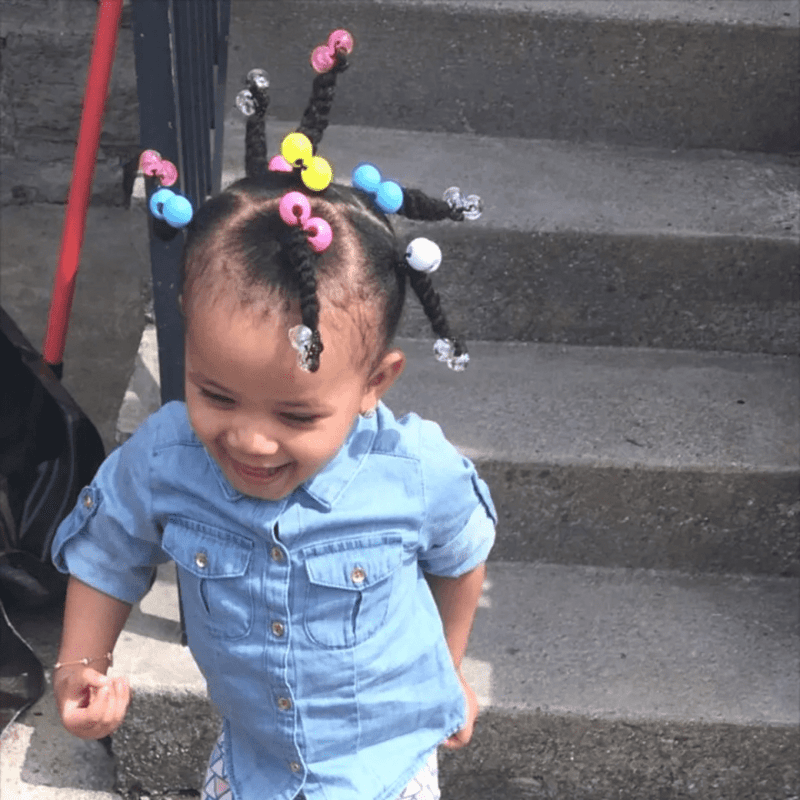
Short toddler hair can gain length and movement with a bit of added weight. Beads, barrettes, and, as shown here, twin beads at the ends of twisted or plaited sections help direct short hair to grow downward rather than outward.

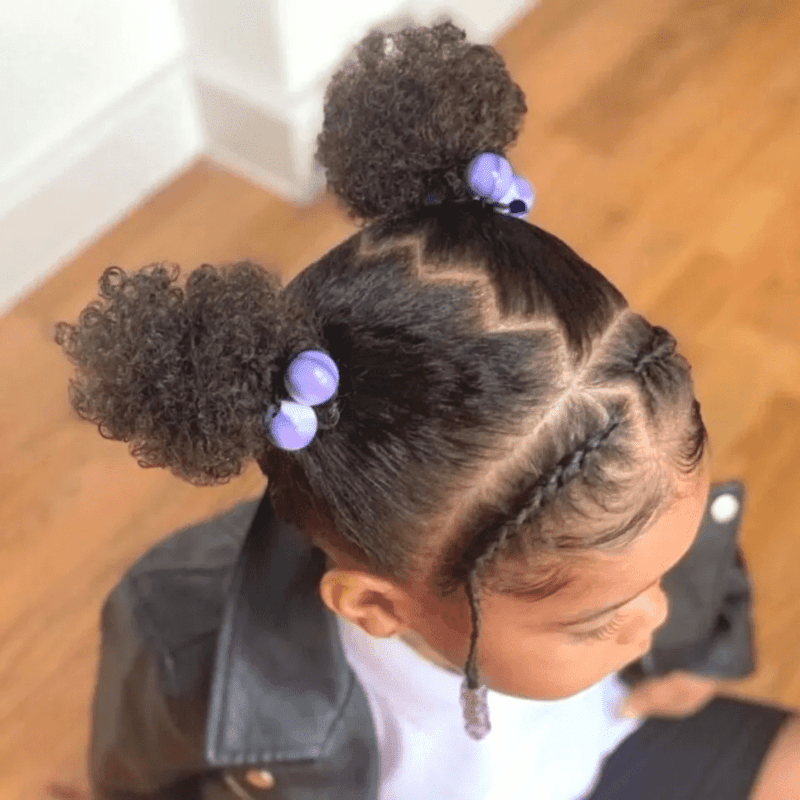
CORNROWS WITH ZIG ZAG DOUBLE PUFFS

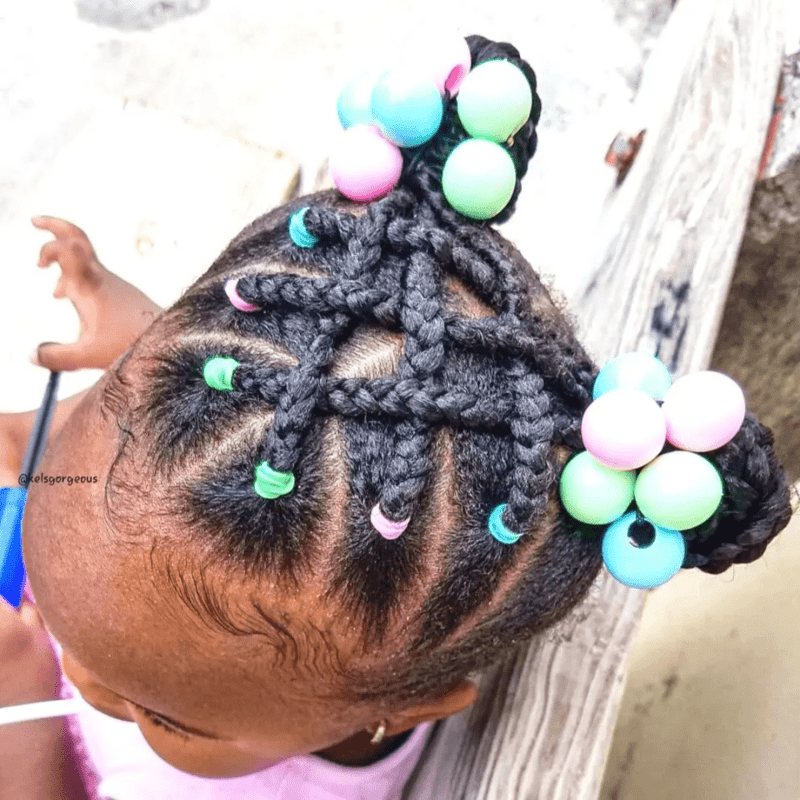
Cornrows with zigzag patterns and double puffs are a playful and stylish choice for two-year-olds. This fun hairstyle combines intricate braiding with bouncy puffs, creating a look that’s both eye-catching and suitable for young kids.

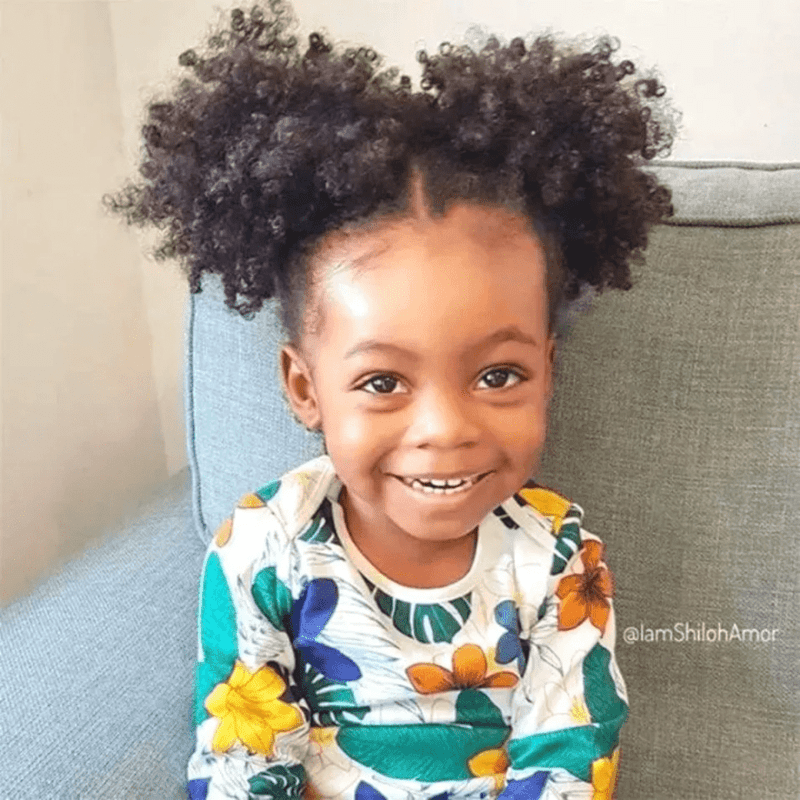
AFROPUFF GIRL

Nothing says “pretty girl rock” quite like a pair of classic afro puffs. The fuller the puffs, the better! Define your toddler’s curls with Aunt Jessie’s Baby Butter Crème on wash day for curls that stay bouncy and beautiful all week at daycare.

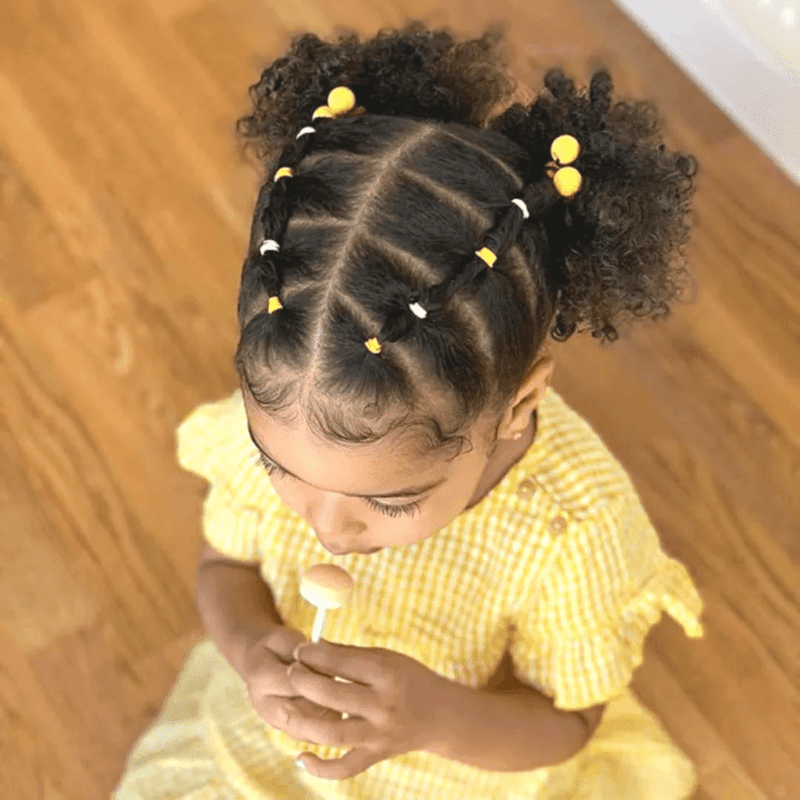
BRAID-FREE PASTEL PATTERN

Alternating white and yellow rubber bands offer a delightful braid-free style, ideal for braid-shy moms and active toddlers.

TWO STRAND TWISTS ON TODDLERS

Twists and their “twist-outs” are a quick and easy style for damp, freshly washed hair, perfect for both moms and their babies. Twists provide a heat-free method to stretch drying hair, setting the stage for more intricate braided and cornrowed styles later. Adding a headband or wrap to the freestyle twists completes the look and enhances the protective style.

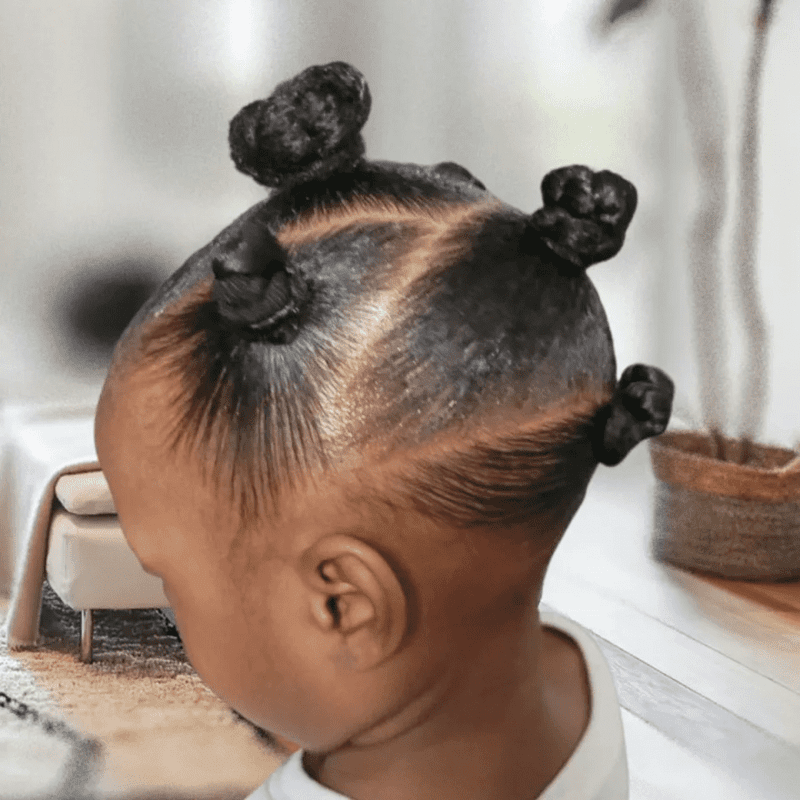
ZIGZAG BABY BANTU KNOTS

This five-section style is defined by precise parts and neatly laid sections. Secure each base with a rubber band, then band again after tightly winding the plaited hair into a knot. Use kid-friendly edge control for a sleek, smooth finish.

AFROPUFF WITH CURLY BANGS

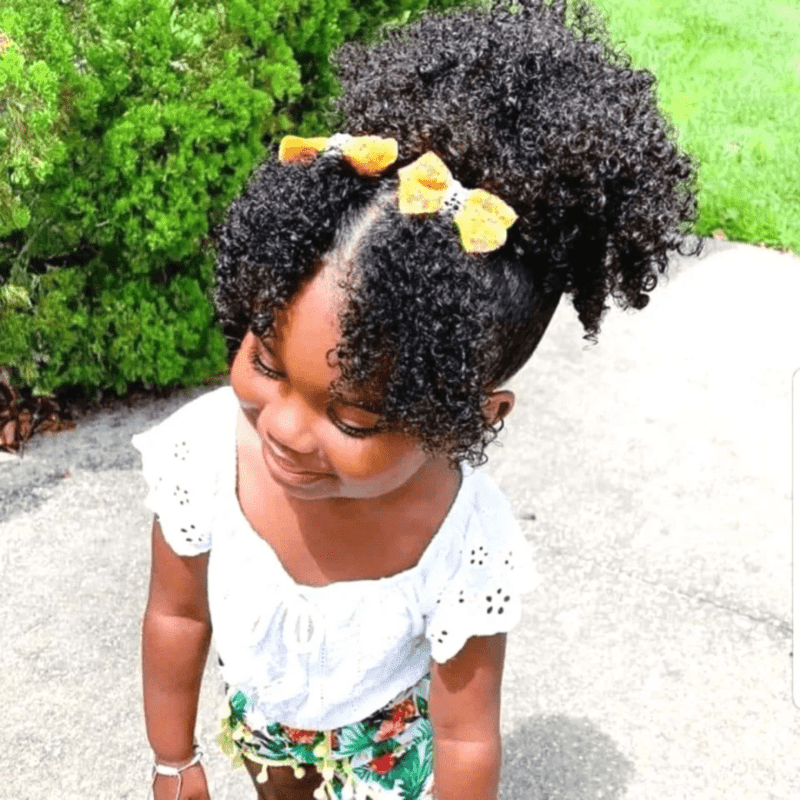
Toddler curls are delicate, soft, and charming during their early years. Hairstyles can range from elaborate to simple. Here, baby girls’ curls are left loose and free for everyone to admire, with short front curls styled like bangs. A large statement bow adds an extra touch of specialness to the softly gathered high ponytail.

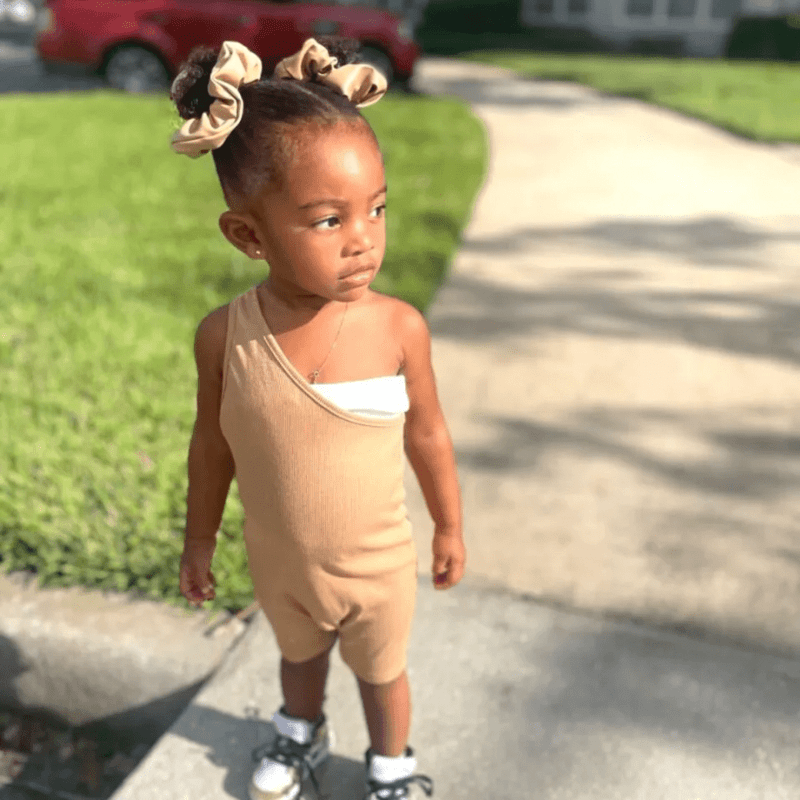
BABY BUNS WITH DOUBLE SCRUNCHIE

Nothing adds volume to fine toddler hair like a classic ’90s scrunchie. Thankfully, they’re making a comeback!

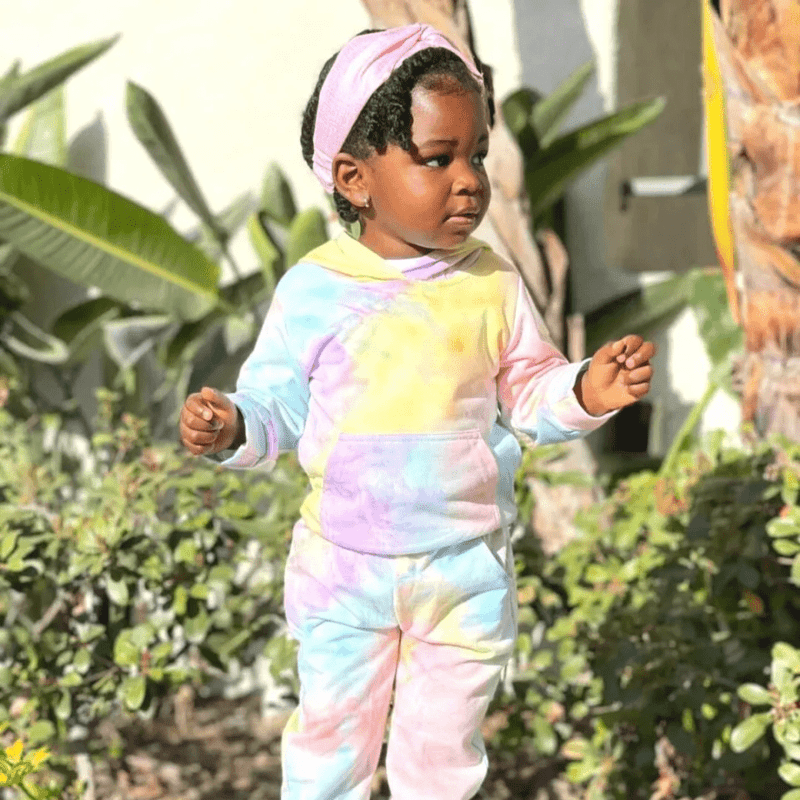
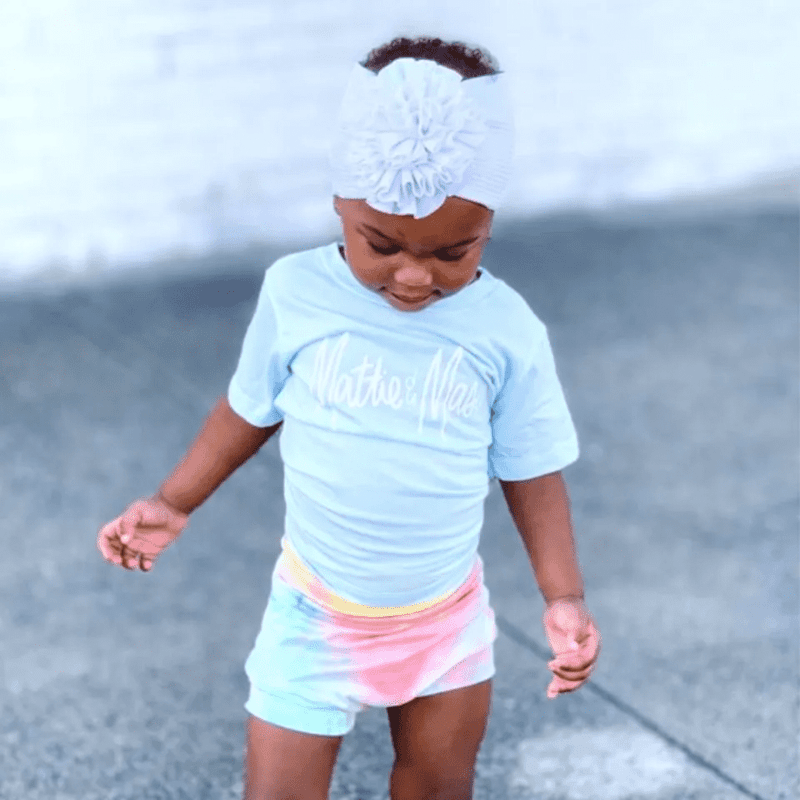
TWA WITH A MEGA HEADBAND

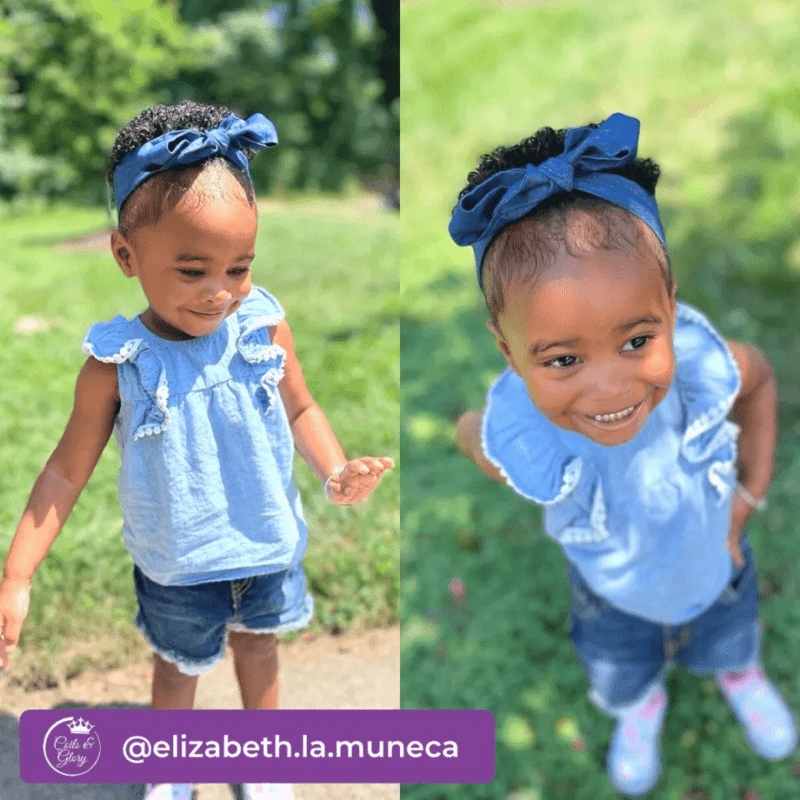
Every child is unique, so cherish the carefree days of short-haired babies while they last. Celebrate baby girls’ peach fuzz with bows, headbands, wraps, and hats.

VALENTINE’S CHIC

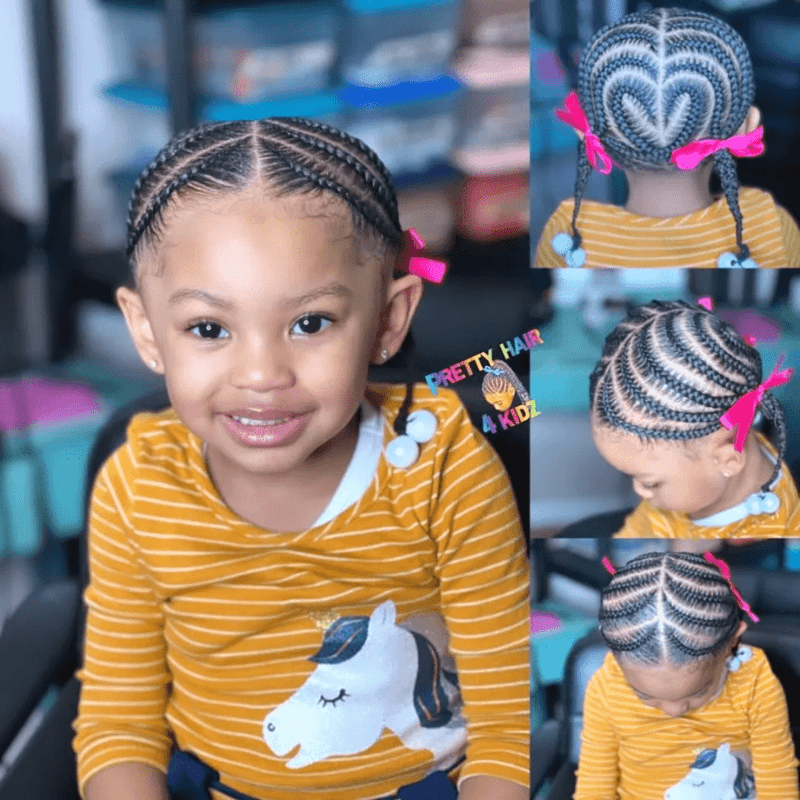
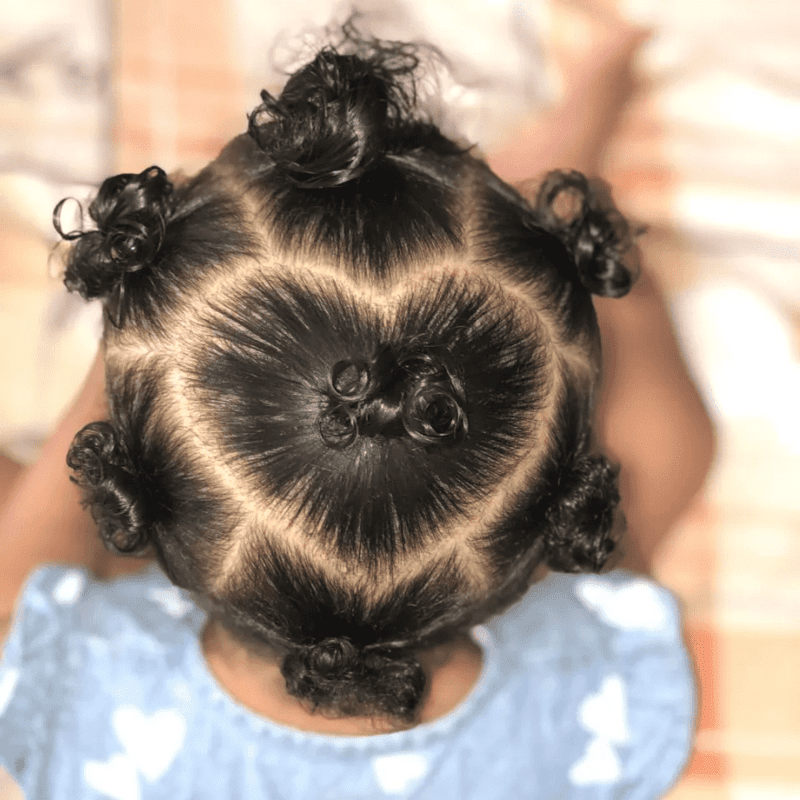
The rear heart serves as the centerpiece and focal point of this style. After creating the heart part, six symmetrical spokes outline the remaining sections. Apply leave-in curl conditioner to enhance shine and definition.

HALF-UP HALF-DOWN

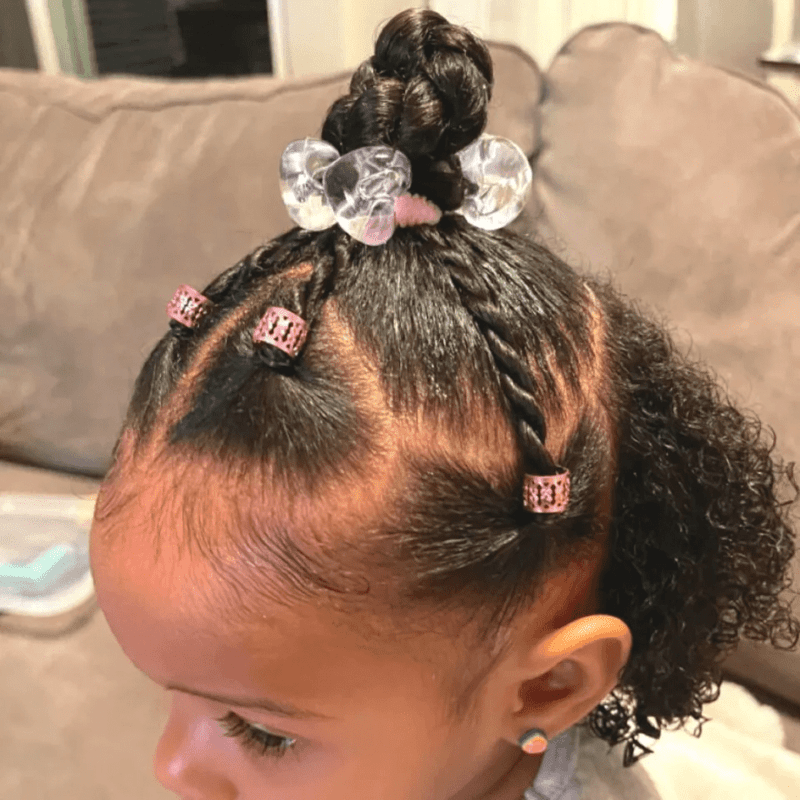
Part broad sections along your toddler’s hairline to create individual twists. Face-framing strands, especially if too short for a ponytail, can become fuzzy, but shorter strands stay neat within the small twisted sections. Gather the remaining hair into a fluffy top ponytail or leave it loose to showcase natural curls. Finish the look with pretty pink metallic cuffs for a delightful touch.

RUBBERBAND SECTIONS

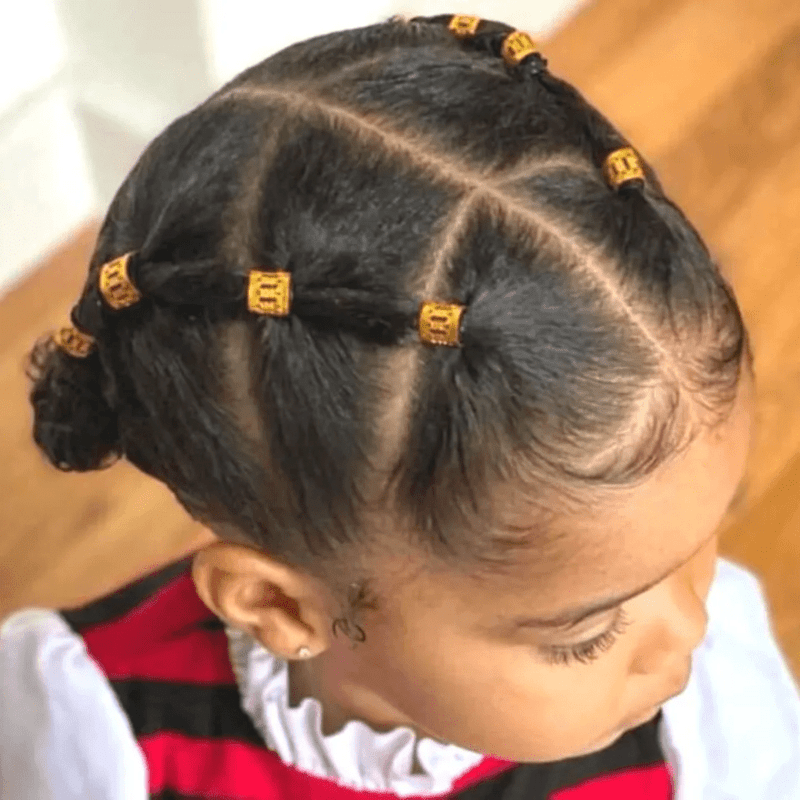
Metallic braid cuffs add a touch of elegance to basic black rubber bands. Start from the front and work your way back, connecting each section for a neat, unified look. For longer hair, link sections of the free-hanging ponytail like little sausages. Place the cuffs over the rubber bands along the length of the style for a polished finish.

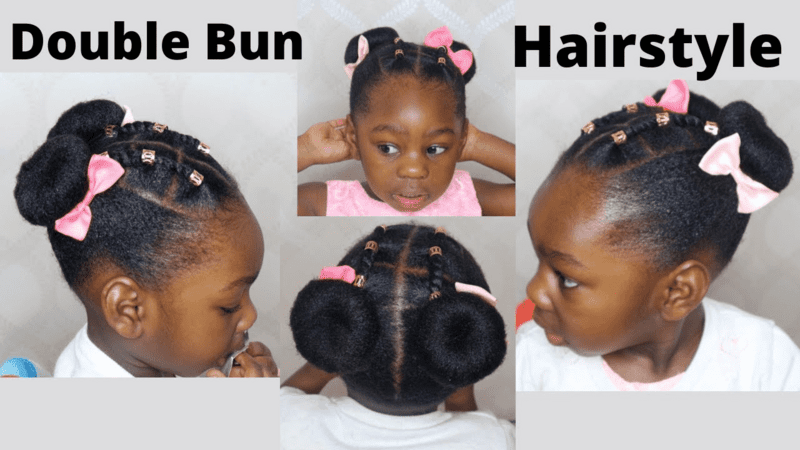
DOUBLE MEGA BUNS

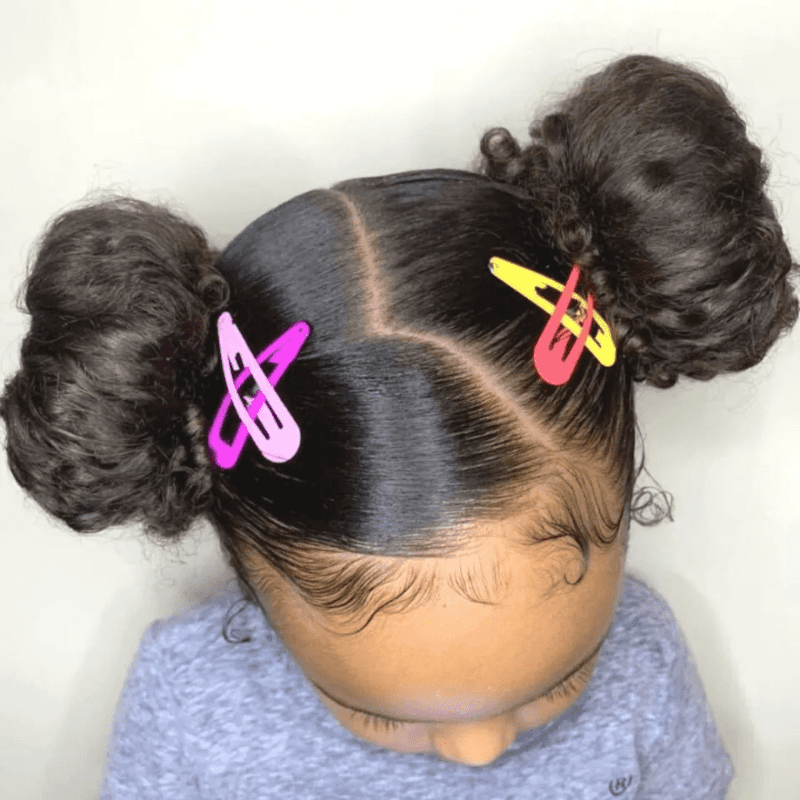
Diagonals, zig-zags, and lightning bolt parts instantly add flair to your toddler’s hairstyle. Loose hair gathered into buns looks even more adorable when accessorized with crisscrossed rainbow clips.

BASKET WEAVE PARTY PLAITS

No cornrow skills are needed for this style. The simple basket weave creates a complex look from straightforward plaited hair. Banded sections on either side of a central part are braided from root to tip. Gather the plaits on the left into the larger section of remaining hair on the right. Weave the small plaits on the right under, over, and under to form the basket pattern, then gather them into a ponytail on the opposite side. Finish with a pair of buns adorned with matching twin beads.

BANDED BEAUTY

Colored rubber bands and symmetrical parts add visual interest while keeping hair neatly in place. Twisted bangs help reduce tension at the front. Gathered hair can be left in a poof or twisted to complement the front style.

PIGTAIL PUFFS

Fuzzy edges indicate it’s time for a style refresh. Keeping your toddler’s hairline cornrowed helps prevent fuzz from disrupting a beautiful look. These charming puffs stay neat longer with the edges braided down.

SPLIT TWIST FREESTYLE

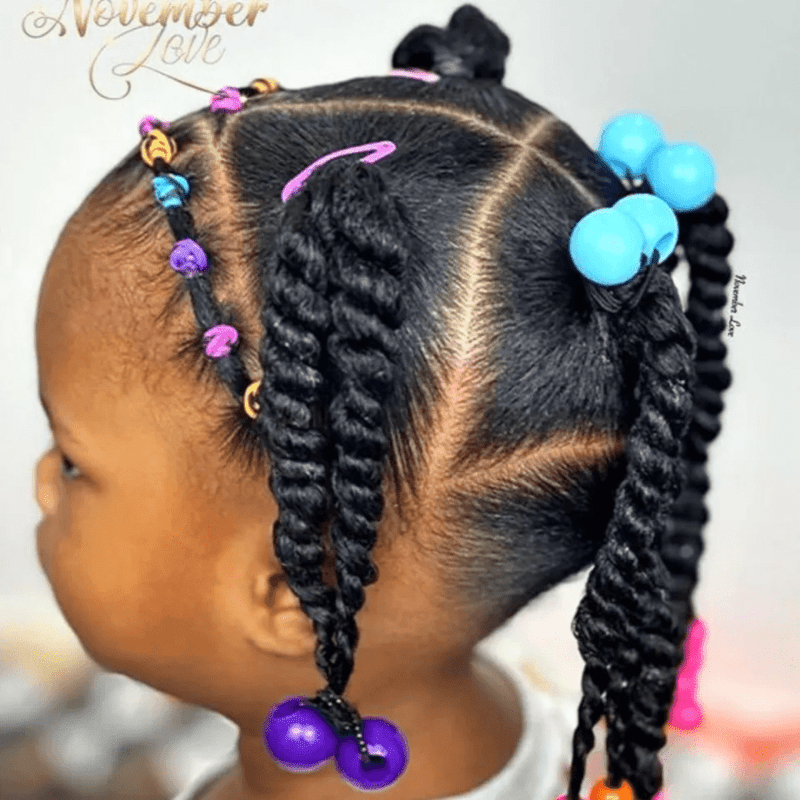
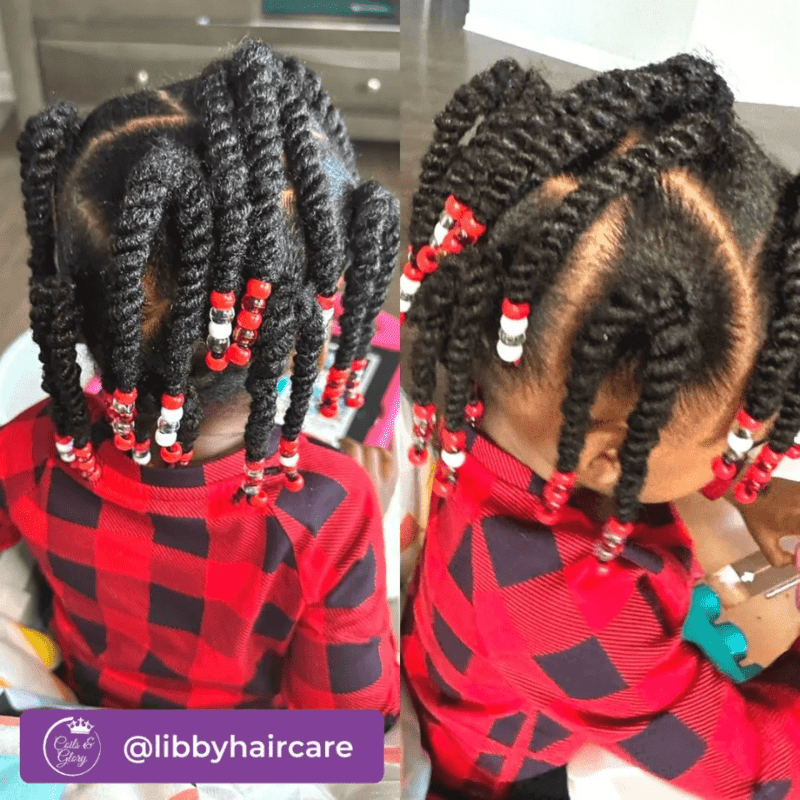
Freestyle parts and simple two-strand twists offer a quick and easy style suitable for children of any age. This look is especially effective on freshly washed, damp hair, as the twists will be coily and more likely to stay in place. Divide each gathered section into two twists for added volume, and use beaded ends to add weight for extra stretch and movement.

CUTE CURLS WITH A HEADBAND

Newborn curls require gentle care and consistent cleansing and conditioning. Maintain your toddler’s hair with a shiny and defined look using kid-friendly leave-in conditioner and curl-defining custard. Before long, that TWA will transform into a full, glorious crown.

EAR-TO-EAR BRAIDED HEAD BAND

This ear-to-ear style perfectly complements an ear-to-ear smile. As their daughter’s hair and patience grow, many moms start learning to cornrow. This beginner-friendly style features a single cornrow across a wide left-to-right section of hair. The tail is gathered into a natural top puff and embellished with bows and barrettes.

FULANI CORNROWS WITHOUT EXTENSIONS

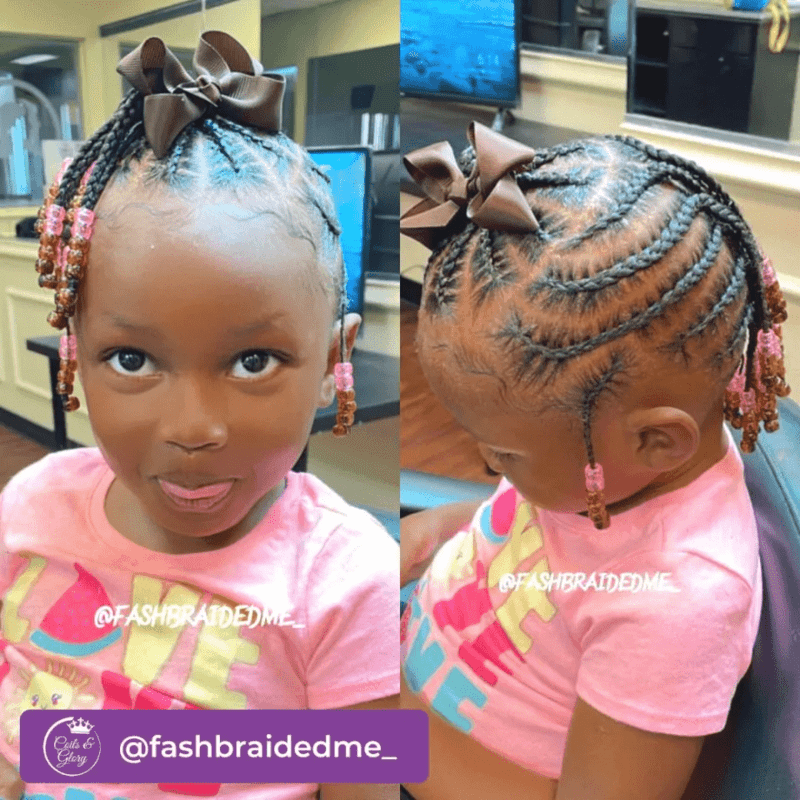
Natural hair cornrows are an excellent way to showcase your toddler’s personality. The pie-slice part pattern provides a great opportunity for a top bow. Let your daughter choose her favorite accessories in her preferred colors. Here, subtle brown beads complement her choice of pink perfectly.

CORNROWS INTO AN AFROPUFF

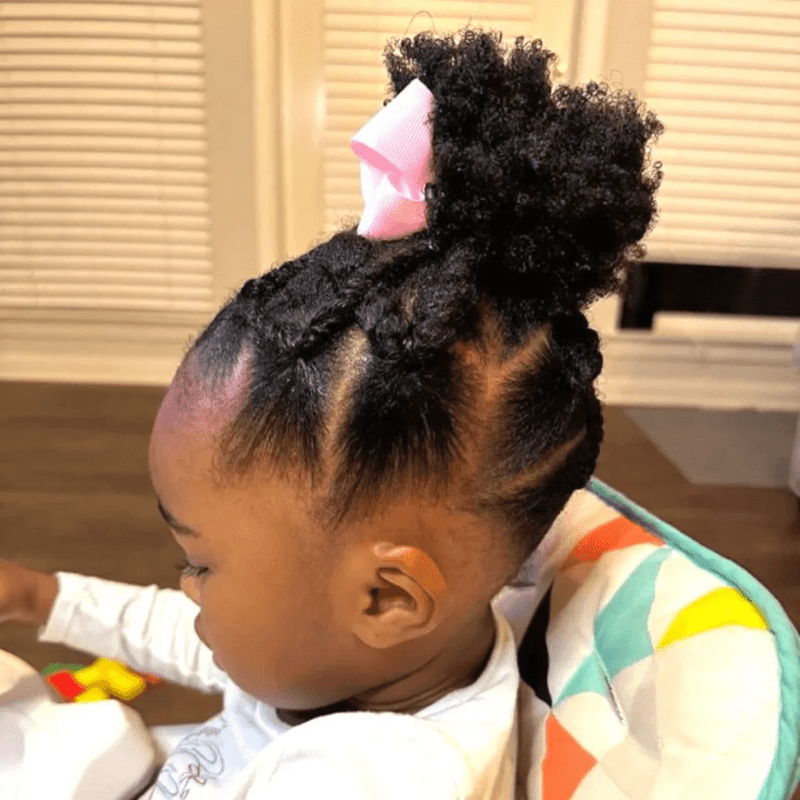
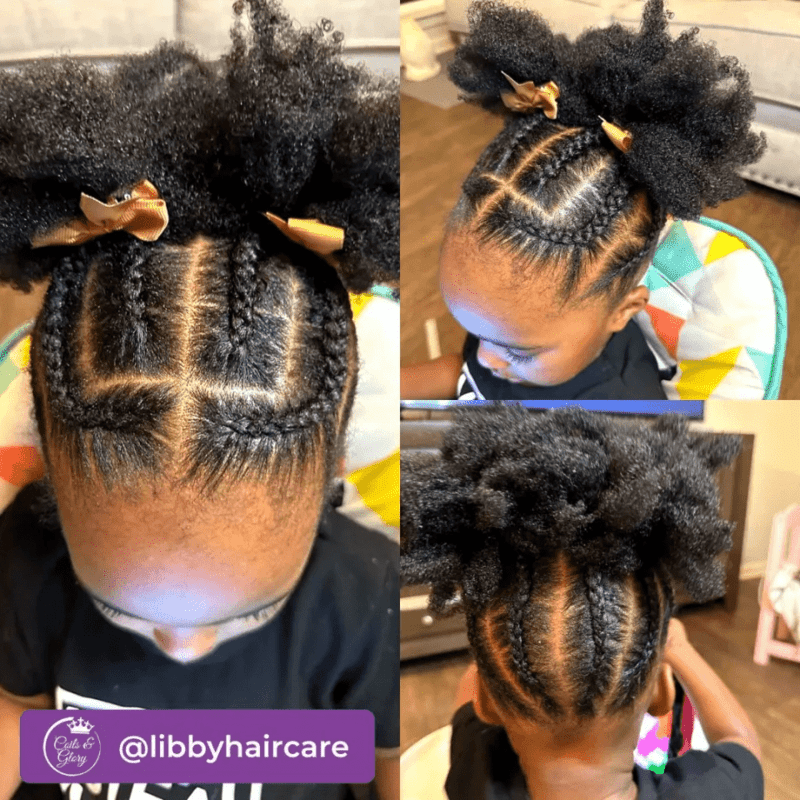
Restless toddlers may not have the patience for intricate cornrow styles, so aim for a neat, sweet, and functional look. This square pattern gathers the front half of the hair into four broad sections, making it easy to manage.

Cornrow the remaining hair while your baby naps on a pillow in your lap or enjoys a snack in her highchair. If she becomes too restless, skip the rear sections and smooth the back into a natural puff. Add grosgrain bows for a touch of sparkle.

TOP KNOT ON LITTLE GIRLS

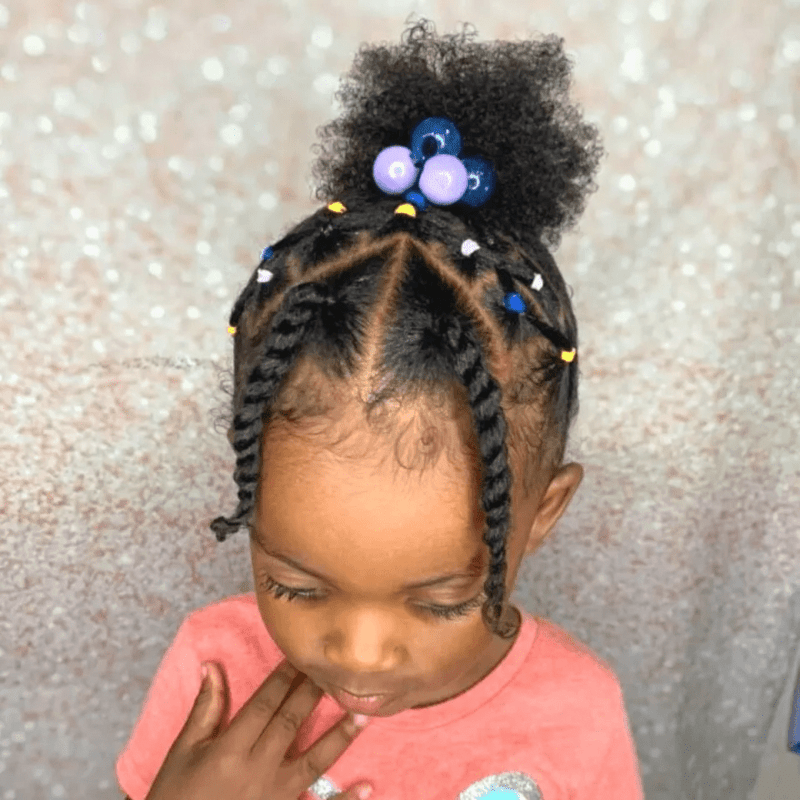
Whether you call them twin beads, bobbles, baubles, or balls, we all wore them, and now our babies do too. Cluster complementary colors around your baby girl’s top knot, letting her choose the shades while you smooth her edges into place.

TWISTS WITH BARET

Two-strand twists are a classic and quick way to elevate your toddler’s hair from frazzled to fancy. Adding barrettes to the ends provides extra weight, giving the twists stretched length and playful movement.

THREE AFRO PUFFS

Your toddler’s hair is delicate and new, so celebrate her natural curls with a simple top puff and a charming accent bow.

CONCLUSION

Embrace the beauty and versatility of your little one’s natural hair! From adorable puffs and twists to playful braids and buns, these 40 hairstyles offer endless possibilities for your two-year-old’s unique style. Remember, the most important thing is to choose styles that are comfortable, low-maintenance, and protect your child’s delicate hair. With a little creativity and care, you can create stunning looks that celebrate your toddler’s natural beauty and confidence.